
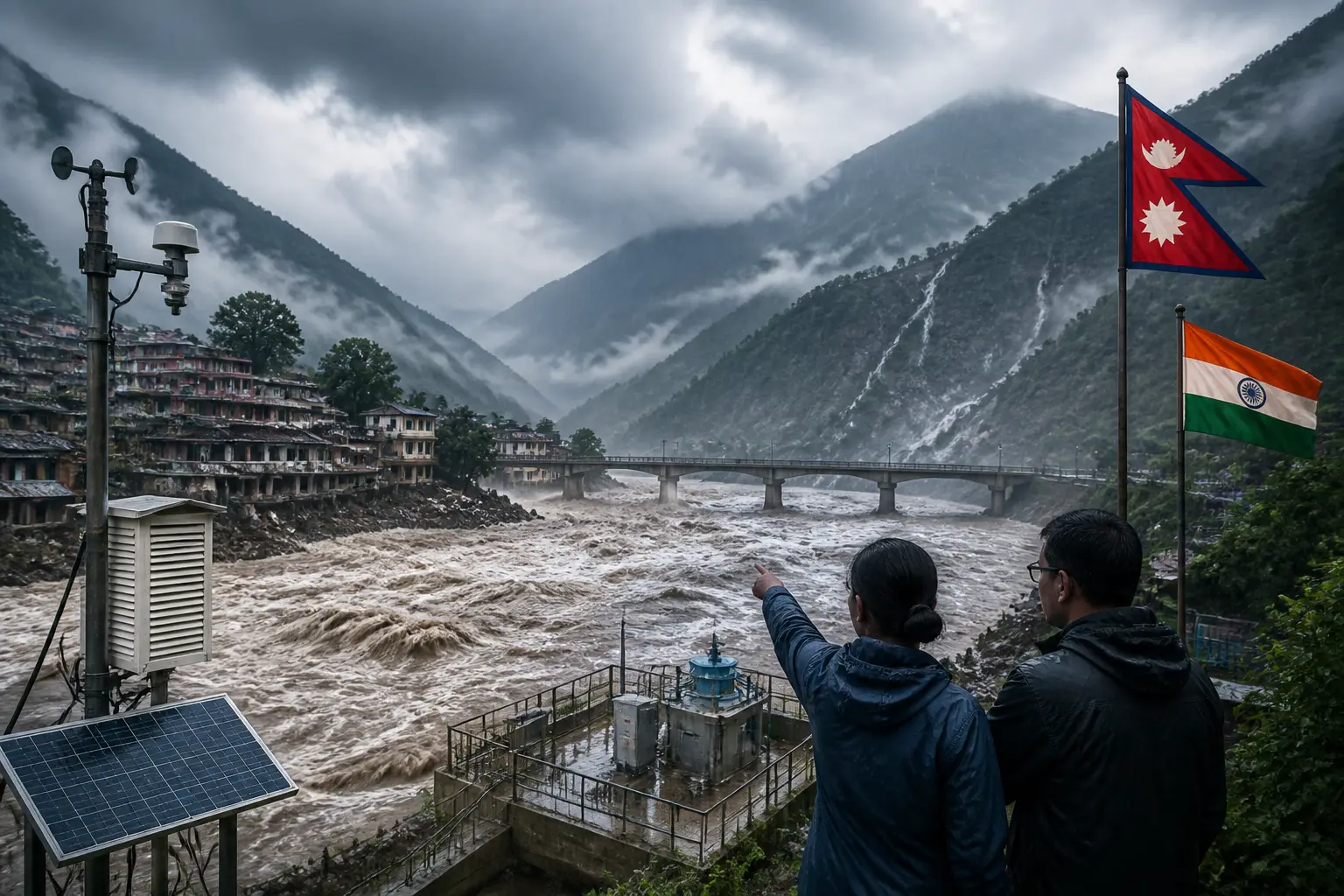
Nepal's floods, which have killed over 1,000 people, underscore shared environmental risks with India due to their interconnected Himalayan river systems.
Nepal's floods have exposed risks that extend beyond its borders, affecting India through shared river systems. The disaster highlights the complexity of how floods in Nepal can impact India, depending on factors like rainfall, river levels, and infrastructure on both sides of the border. The interdependence of the two countries' river systems means that a flood in Nepal does not necessarily translate to a disaster in India, but the potential for shared consequences is significant. The Himalayan rivers, which rise in Nepal and flow into India, are central to this dynamic.
Experts emphasize that the Kosi, Gandaki, and Karnali rivers, along with smaller systems like the Bagmati and Kamala, are key contributors to flooding in India. These rivers, particularly the Kosi, have historically caused severe flooding in Bihar, which is the most flood-prone state in India. The steep and narrow catchments of these rivers contribute to rapid and unpredictable flood events. As climate change increases the frequency and intensity of extreme weather, the shared vulnerability of Nepal and India to Himalayan river-related disasters becomes more pronounced.
Why it matters
Bihar's vulnerability to flooding is directly linked to the river systems originating in Nepal, which can cause severe damage and displacement.
This section reflects Dumpling editorial interpretation and is provided for context only.
What to watch
Future rainfall patterns and river management strategies in Nepal and Bihar will determine the extent of flood risks in the region.
This section reflects Dumpling editorial interpretation and is provided for context only.