
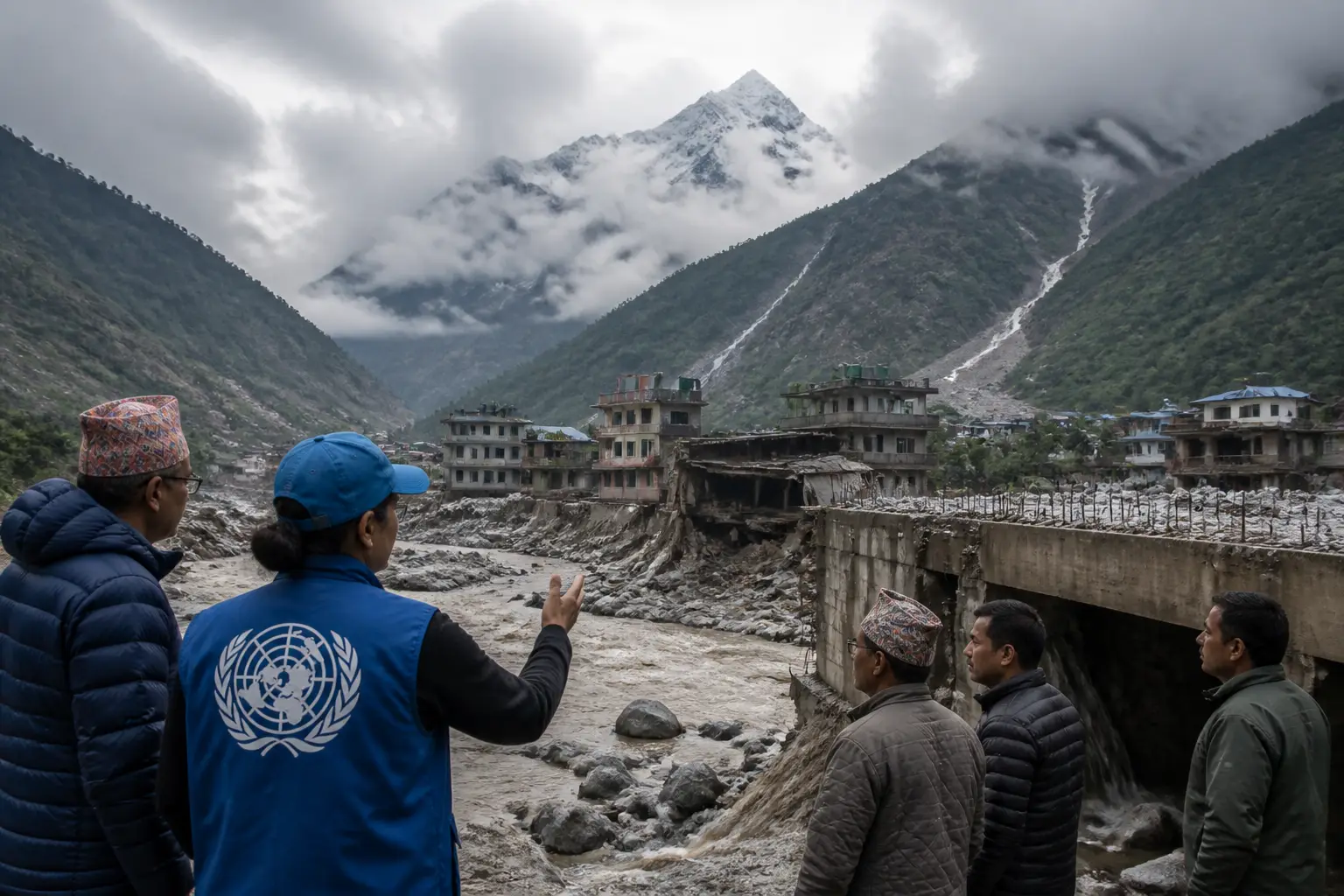
Nepal's foreign minister and the UN climate chief have warned of increasing climate threats following deadly floods linked to glacial collapse in the Himalayas.
Himalayan glaciers, which supply water to nearly 2 billion people, are melting faster due to global warming, increasing the risk of unpredictable disasters. A glacial collapse near the Nepal-China border triggered torrential flooding on Wednesday, leaving nearly 3,000 people missing and 682 confirmed dead. The event occurred along the high-altitude border, with the exact cause of the collapse remaining unclear, though climate change is a contributing factor. The disaster has exposed communities to costly and unpredictable challenges, highlighting the growing threat from global warming to the Himalayas.
Nepal's foreign minister, Shisir Khanal, and Chinese officials agreed to enhance the sharing of real-time hydrological data, according to a statement. China has already shared crucial information with Nepal, including disaster area imagery, satellite and hydrological data, as well as early warnings about upstream barrier lakes. Khanal emphasized the need for greater research to understand the changing dynamics of the Himalayan ecosystem and the risks it poses to Nepal and its neighbors. The UN climate chief, Simon Stiell, highlighted the fragility of mountain environments and the urgent need for international action to address the impacts of climate change.
Why it matters
Nepal's vulnerability to climate change highlights the urgent need for global cooperation to protect the Himalayan ecosystem and mitigate disaster risks.
This section reflects Dumpling editorial interpretation and is provided for context only.
What to watch
The effectiveness of data-sharing agreements between Nepal and China in preventing future glacial-related disasters will be a key indicator of progress.
This section reflects Dumpling editorial interpretation and is provided for context only.