
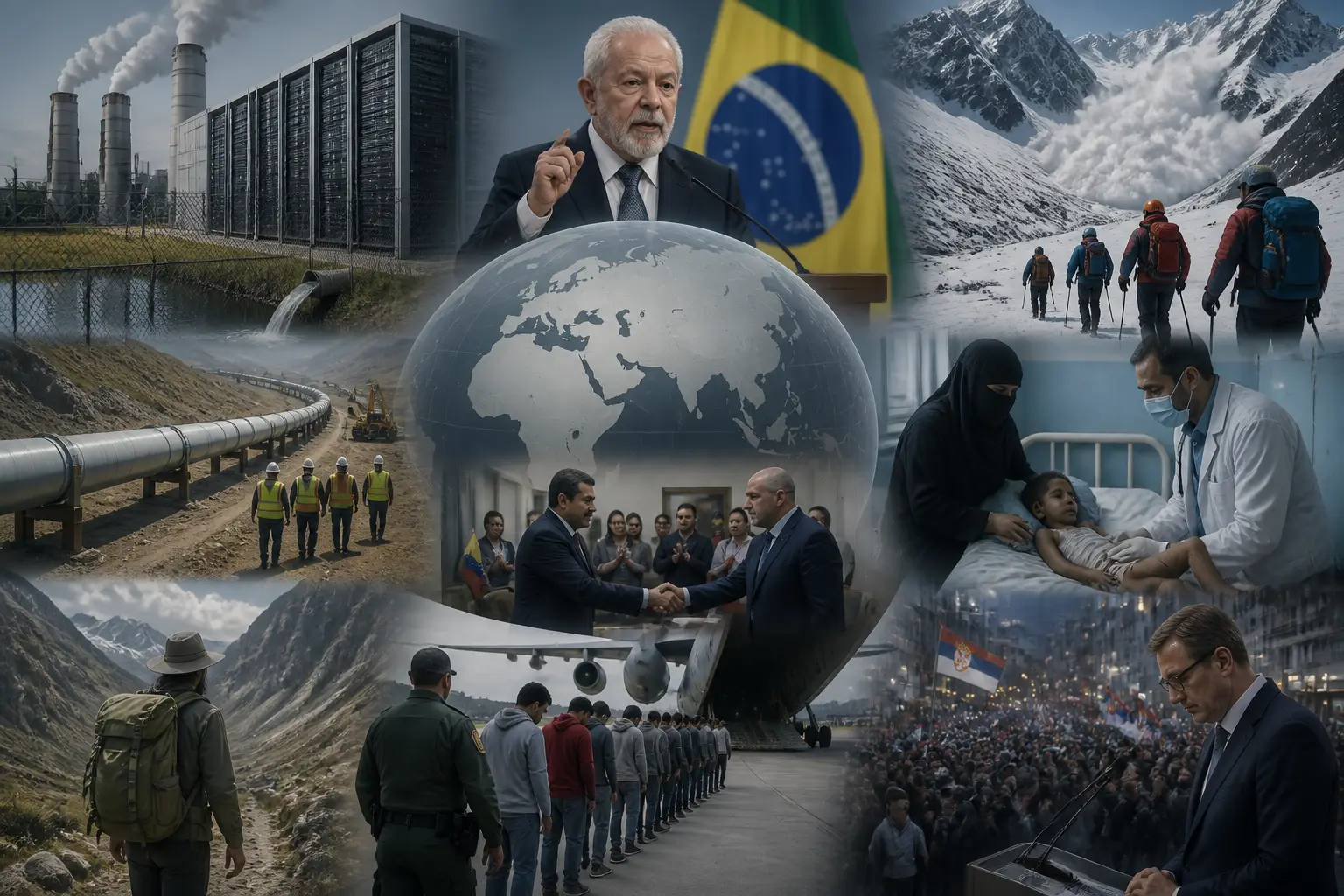
Environmental groups accuse datacenter developers of skirting US pollution rules, while Brazil's Lula bans online gambling ahead of elections. In Africa, a major fuel pipeline is funded, and a US policy sends migrants to third countries. A deadly avalanche in Nepal and a health crisis in Yemen underscore ongoing global challenges.
The 60-second global view
A mix of regulatory, political, and humanitarian developments shaped the global landscape today. In the US, environmental groups accuse datacenter developers of manipulating EPA processes to avoid pollution controls, raising concerns about regulatory oversight. Brazil's Lula announced a ban on online gambling ahead of the presidential election, a move that could impact the economy and political dynamics. In Africa, a Nigerian billionaire is funding a major fuel pipeline between Ethiopia and Djibouti, aiming to improve energy security. Meanwhile, the US is reportedly sending migrants to third countries under secret deportation deals. In Nepal, an avalanche killed two and left 14 missing, while Yemen's health system faces collapse due to war. These developments reflect a complex interplay of environmental, economic, and humanitarian issues across the globe.
Across the regions
Africa
A Nigerian billionaire has announced funding for a $660m fuel pipeline between Ethiopia and Djibouti, aiming to improve energy security and create jobs. The pipeline will connect Djibouti's Damerjog port to a distribution facility in Dewele, Ethiopia, with a capacity of 400 million litres. Separately, the Trump administration has reportedly struck secret deportation deals with 35 countries, sending up to 25,000 migrants from the US to locations with no prior connection to them. These deportations have raised questions about their legality and the conditions faced by those who are deported.
- Africa's richest man funds $660m fuel pipeline between Ethiopia and Djibouti
- Trump administration sends migrants to third countries under secret deportation deals
Americas
Brazilian President Lula da Silva has signed a provisional order banning online gambling ahead of the presidential election, citing concerns over addiction and financial harm to families. In Venezuela, political prisoners have been released following a meeting between the interim leader and US President Donald Trump. Meanwhile, a 30-year-old Australian hiker has been missing for nearly two weeks after setting out on a solo trek in Peru’s Huayhuash mountain range, prompting a large-scale search by private rescue crews.
- Brazilian President Lula Announces Online Gambling Ban Ahead of Election
- Venezuela releases political prisoners after interim leader meets US president
- Australian hiker missing after 10-day trek in Peru
Asia Pacific
An avalanche struck a Himalayan base camp in Nepal, killing two guides and leaving at least 14 people missing. The disaster occurred amid severe weather conditions in the region. The deceased and missing individuals are all mountain guides and staff from Nepalese expedition companies who were preparing the base camp for paying climbers. Search and rescue operations are currently underway, with officials noting that the presence of fresh snow may improve the chances of survival.
Europe
Serbia's president has resigned following more than a year of protests and public discontent over allegations of government corruption, paving the way for early elections. The resignation comes after sustained demonstrations involving students, teachers, workers, and farmers, which were initially triggered by the 2024 collapse of the Novi Sad railway station's roof, an incident that killed 16 people.
Middle East
Yemen’s health system may not be able to support the population as war strains resources, according to the minister of public health and population. Some areas in Yemen could suffer from a complete loss of health services if a decline in funding continues. Health data from June 2026 indicates that 19.3 million people in Yemen require health assistance, while funding for the response has reached only 17 percent of the required amount.
US
Environmental groups allege that datacenter developers are manipulating EPA permitting processes to avoid emission controls and public scrutiny. By splitting emissions sources into multiple 'minor' permits, companies can sidestep public scrutiny and expedite approvals, potentially saving costs and avoiding the need for pollution controls. Examples include Amazon and Duke Energy in North Carolina, which installed 649 diesel generators and submitted two permits to avoid a major review in a low-income area already burdened by high pollution levels.
What connects them
The environmental concerns in the US and the infrastructure developments in Africa are both linked to broader economic and regulatory challenges. In the Americas, the political shifts in Brazil and Venezuela reflect the impact of elections and international relations on domestic policies. The humanitarian crises in Nepal and Yemen highlight the global consequences of natural disasters and war on vulnerable populations. These developments are interconnected through their implications for governance, economic stability, and human rights.
This section reflects Dumpling editorial interpretation and is provided for context only.
What to watch
- Environmental groups continue to monitor datacenter developers for compliance with US pollution rules.
- Brazil's online gambling ban may affect the economy and political landscape ahead of the presidential election.
- Yemen's health system faces a potential collapse due to ongoing war and insufficient funding.
This section reflects Dumpling editorial interpretation and is provided for context only.