
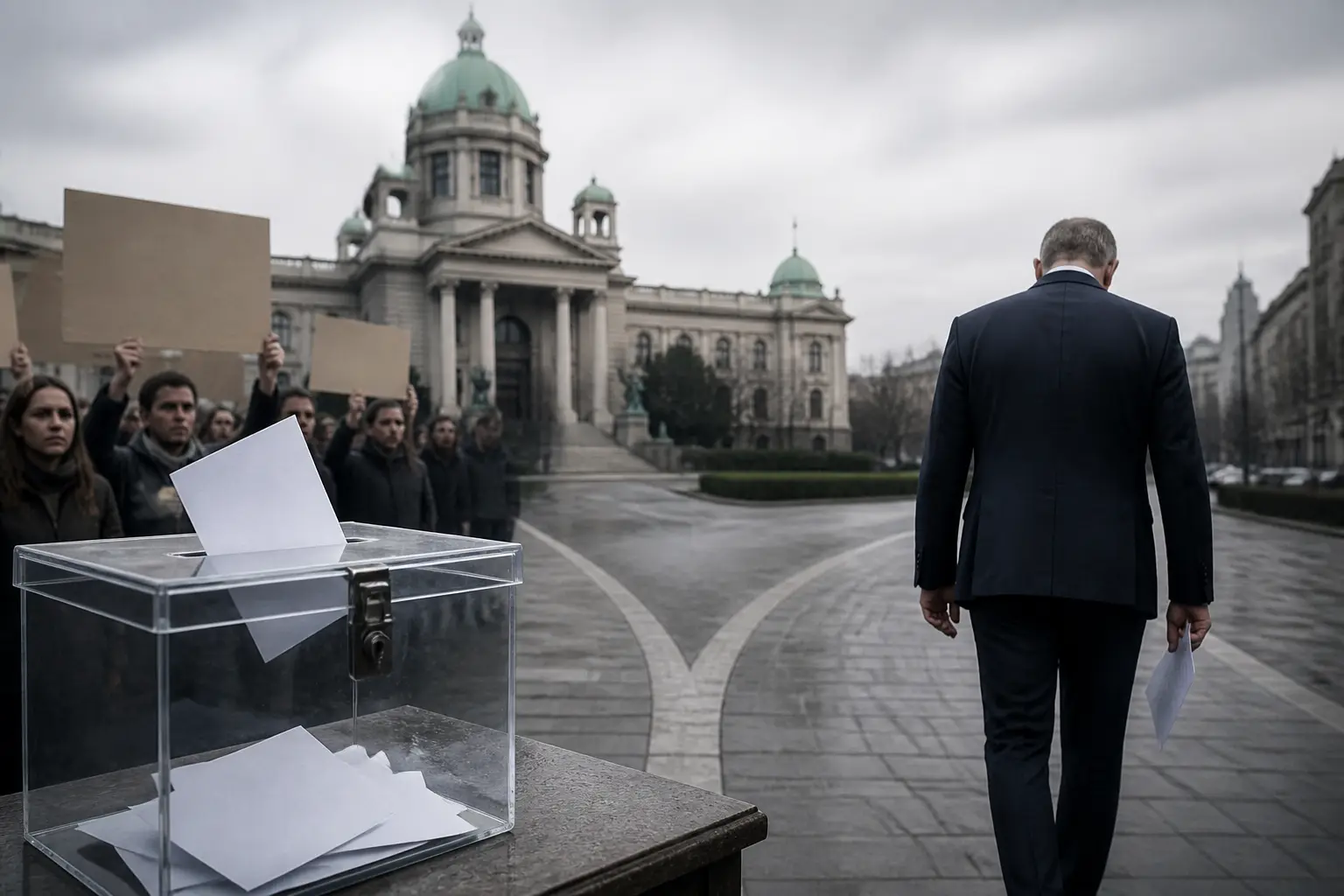
Serbia's president has resigned following more than a year of protests and public discontent over allegations of government corruption, paving the way for early elections.
The resignation comes after sustained demonstrations involving students, teachers, workers, and farmers, which were initially triggered by the 2024 collapse of the Novi Sad railway station's roof, an incident that killed 16 people. The disaster was seen as a reflection of the Progressive Party's governance, with Vučić closely associated with the station's renovation project. Despite a series of resignations by officials under his administration, protests continued throughout the summer, with demonstrators also accusing the police of brutality.
Vučić had previously announced his intention to resign in June and is now seeking to run as his party's candidate for prime minister in the upcoming parliamentary elections. Under Serbia's constitution, presidential elections must be held within three months of his resignation, meaning Serbians will go to the polls twice before the end of the year. The presidential election is expected to take place more than a month after the snap parliamentary election in late October, which was called in response to the protests. Parliamentary speaker Ana Brnabić will serve as interim president until a new one is elected.
Why it matters
Serbia's political landscape is shifting as the president's resignation could lead to significant changes in leadership and governance.
This section reflects Dumpling editorial interpretation and is provided for context only.
What to watch
The outcome of the upcoming parliamentary elections will determine the next phase of Serbia's political direction.
This section reflects Dumpling editorial interpretation and is provided for context only.