
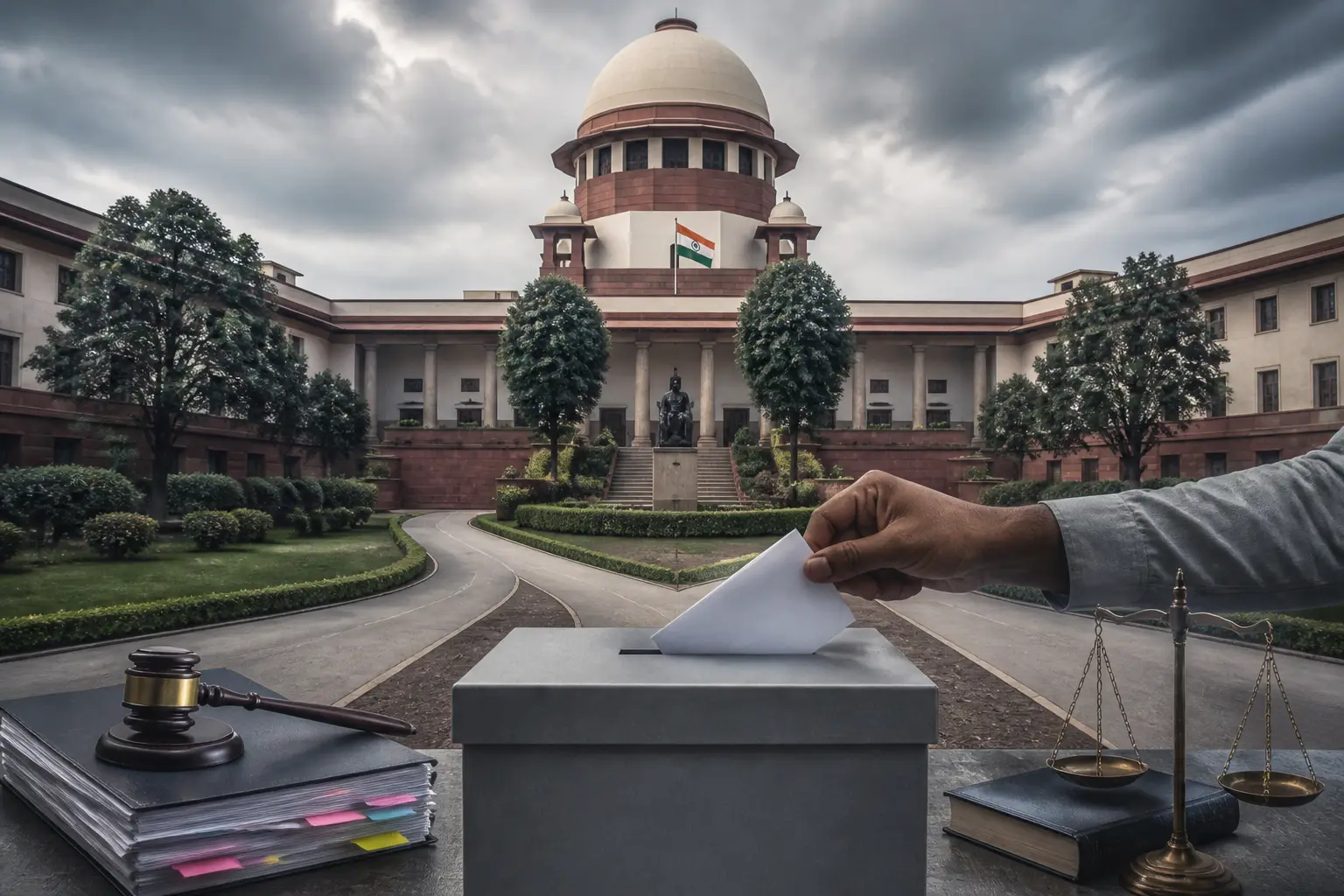
India's Supreme Court is examining a 2023 law that altered the appointment process for election commissioners, with critics arguing it undermines the independence of the electoral authority.
A two-judge bench of the Supreme Court of India heard petitions challenging a 2023 law that changed how the Chief Election Commissioner and Election Commissioners are appointed. The new law established an appointing committee including the prime minister, the leader of the opposition, and a union cabinet minister nominated by the prime minister, replacing the previous role of the Chief Justice of India.
Critics argue the inclusion of a cabinet minister instead of an independent chief justice compromises the independence of the election authority. The court referred the matter to a three-judge bench for further consideration. Justice Dipankar Datta expressed concerns about the perceived independence of the Election Commission, while Justice Satish Chandra Sharma suggested the issue requires a Constitutional Bench for interpretation.
Why it matters
The change in appointment process affects the perceived independence of India's Election Commission, a key institution for ensuring free and fair elections.
This section reflects Dumpling editorial interpretation and is provided for context only.
What to watch
The Supreme Court's three-judge bench will determine the legal validity of the 2023 election law changes.
This section reflects Dumpling editorial interpretation and is provided for context only.