
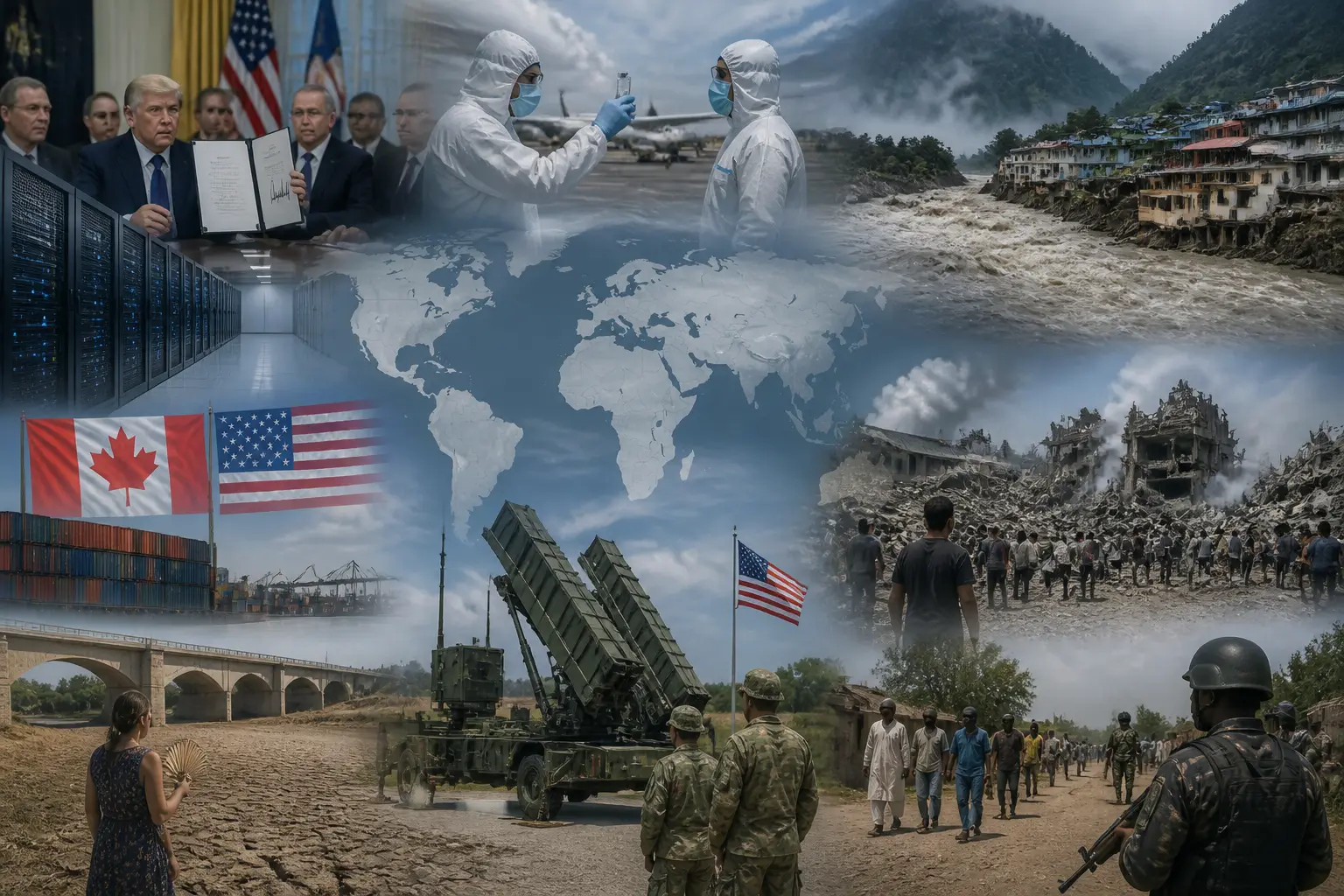
From trade conflicts and climate inaction to humanitarian crises and environmental policy shifts, global events highlight deepening challenges across regions.
The 60-second global view
The world is marked by a mix of escalating tensions and natural disasters. In the Americas, Canada's trade response to the US underscores rising economic friction. In Europe, climate inaction and military developments reflect broader geopolitical and environmental concerns. Meanwhile, in Asia Pacific, a devastating flood on the Nepal-Tibet border highlights the vulnerability of regions to extreme weather. Africa faces a worsening kidnapping crisis, while the Middle East continues to grapple with humanitarian impacts of conflict. These events collectively illustrate the complex interplay of economic, environmental, and security challenges shaping the global landscape.
Across the regions
Africa
Kidnappings for ransom are intensifying in Nigeria's north-west, with attacks increasingly targeting communities further south. Survivors describe violent attacks where gunmen surround villages and open fire indiscriminately, often killing civilians who attempt to flee. The UN reports that approximately 800,000 Nigerians have been displaced due to violence in the region. Despite government-backed vigilante groups claiming to have killed many bandits, the violence continues to spread southward.
Americas
Canada has imposed 50% retaliatory tariffs on $20 billion in US imports, fulfilling a promise by Mark Carney to respond 'dollar for dollar' to US trade measures. The move comes in response to a series of U.S. tariffs on Canadian steel and aluminum, which Canada had previously condemned as unfair and protectionist. The new measures target a wide range of American goods, including agricultural products and manufactured items, signaling a deepening of the trade war between the two North American neighbors.
Asia Pacific
At least 157 people have been killed and hundreds, including foreign tourists, are missing after flash floods on the Nepal-Tibet border. Flash floods triggered by an avalanche of ice and rock swept through parts of Nepal, destroying homes, roads, and bridges. Among the missing are 33 British nationals and hundreds of other foreign tourists. Chinese President Xi Jinping has called for intensified search efforts and improved monitoring systems to prevent further disasters.
Europe
Two Frankfurt Airport workers have died from malaria following an outbreak linked to mosquitoes arriving on a plane. European leaders have faced criticism for not addressing climate change despite extreme heat and wildfires this summer. Ukraine has received a small number of US-made Patriot interceptors, with President Zelenskyy seeking more to meet defense needs. These developments highlight a range of challenges, from public health threats to climate inaction and military preparedness.
- Two German airport workers die of malaria after 'mosquito arrives on plane'
- European leaders face criticism for lack of climate action amid extreme summer conditions
- Ukraine receives small batch of US-made Patriot interceptors as Zelenskyy seeks more
Middle East
Israeli military strikes in Gaza have killed at least seven Palestinians and destroyed a warehouse storing nutrition supplies for vulnerable groups. The explosion collapsed parts of the building, burying supplies under rubble and rendering them unusable. The warehouse, operated by Ard El Insan (AEI), was intended to support about 60 medical points serving up to 100 women and children daily. MAP stated that the entire stock was damaged and rendered unfit for human consumption.
US
The Trump administration has proposed a rule that would remove public disclosure requirements for datacenter air pollution. This change would allow emission permits for datacenters to be issued without public notification, potentially limiting oversight of pollutants such as nitrogen oxide. Advocates warn that this shift could reduce transparency and public accountability for datacenter emissions, limiting communities' ability to challenge projects in court or through public engagement.
What connects them
The global landscape is shaped by interconnected challenges. In the Americas, Canada's trade response to the US reflects broader economic tensions that could ripple across international markets. In Europe, the combination of public health threats, climate inaction, and military developments highlights the continent's multifaceted challenges. Meanwhile, the Asia Pacific region faces a humanitarian crisis on the Nepal-Tibet border, underscoring the vulnerability of regions to extreme weather. In Africa, the intensifying kidnapping crisis in Nigeria illustrates the deepening instability in the region. These events, though distinct, collectively reflect the complex interplay of economic, environmental, and security challenges shaping the world today.
This section reflects Dumpling editorial interpretation and is provided for context only.
What to watch
- Canada's trade measures may further strain transatlantic economic relations by escalating tensions and increasing trade barriers between the two nations.
- The spread of malaria at Frankfurt Airport raises concerns about public health preparedness in Europe.
- The destruction of aid supplies in Gaza highlights the vulnerability of humanitarian infrastructure to conflict.
This section reflects Dumpling editorial interpretation and is provided for context only.