
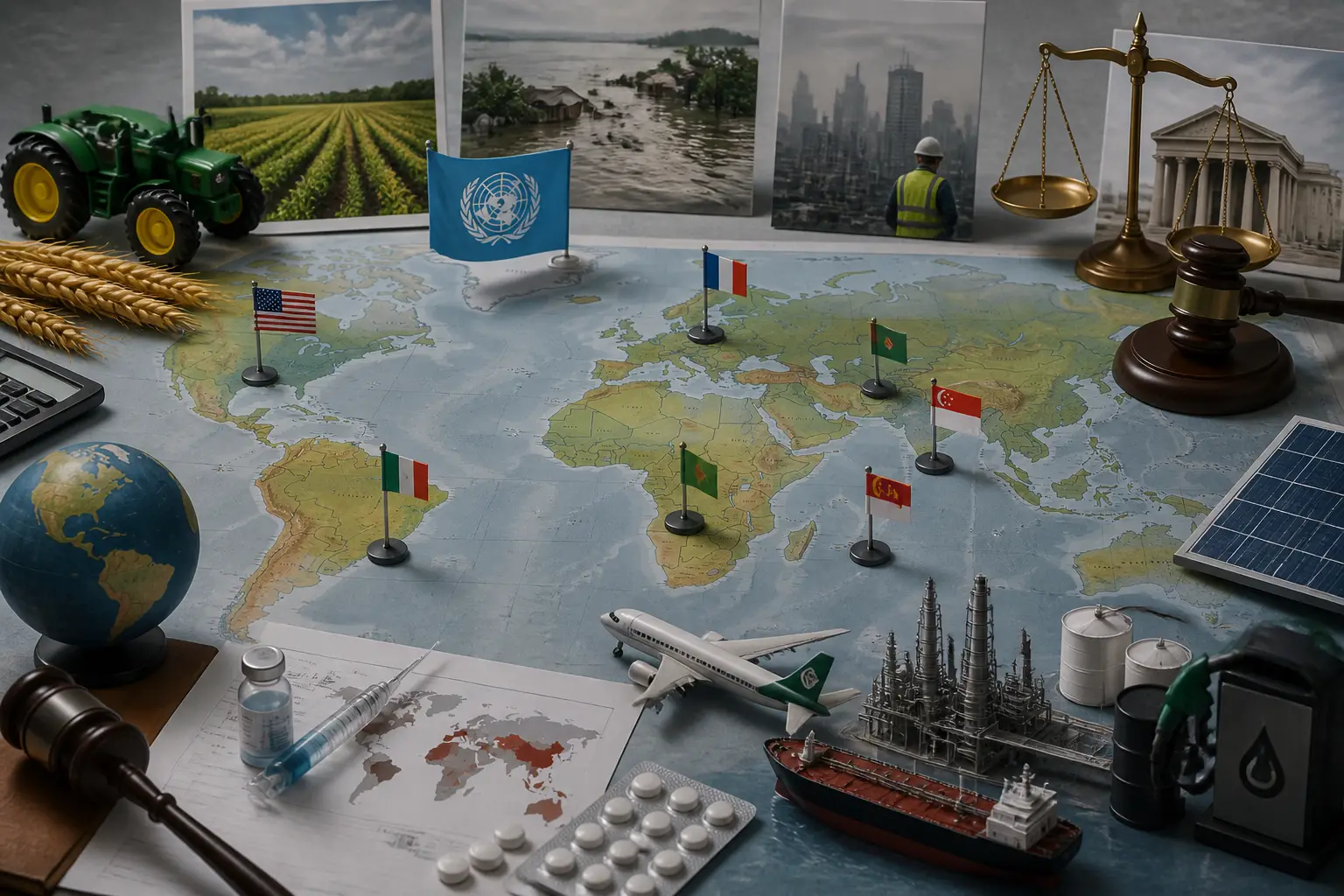
Rising energy costs, climate disasters, and geopolitical conflicts dominate global headlines, with regional developments highlighting economic, environmental, and humanitarian challenges.
The 60-second global view
Global news is marked by a convergence of economic, environmental, and geopolitical challenges. Rising energy prices, exacerbated by conflicts in Iran and Ukraine, have led to calls for export restrictions in the US and Europe. Climate-related disasters, such as floods in Nepal and haze in Singapore, are intensifying demands for international support and adaptation measures. Meanwhile, conflicts in Yemen and legal actions in Sri Lanka underscore the ongoing humanitarian and security crises in the Middle East and Asia Pacific. These developments reflect the complex interplay of global forces shaping the present and future.
Across the regions
Africa
Botswana and neighboring countries are experiencing a resurgence in malaria cases, attributed to declining external funding and increased mosquito resistance. Botswana reported 2,223 cases and 11 deaths in the first 23 weeks of 2025, a significant increase from 2024. Namibia and Zimbabwe also saw sharp rises in malaria cases, highlighting the challenges of reversing progress in malaria elimination efforts. Reduced health assistance to Africa since 2021 has worsened the situation, with projections indicating a potential increase in cases and deaths if funding continues to decline.
Americas
A UN human rights expert has raised concerns that US attacks on boats in the Pacific and Caribbean may constitute crimes against humanity, citing over 230 deaths since September 2025. The attacks, described as extrajudicial killings, have been condemned by the UN and human rights groups. The report disputes claims by former US President Donald Trump that the strikes were acts of self-defence against terrorist organizations. The US has not yet responded to the allegations, leaving the situation in limbo as international scrutiny intensifies.
Asia Pacific
Nepal has requested $20 million from the UN-backed Loss and Damage Fund to address the devastation caused by recent floods that killed over 1,400 people. Meanwhile, in Singapore, employers are enhancing precautions for outdoor workers amid ongoing haze, distributing N95 masks and issuing health reminders. In Sri Lanka, a court has convicted 15 men for their roles in the 2019 Easter Sunday bombings, which killed 270 people and injured over 500. These events highlight the region's diverse challenges, from climate disasters to legal accountability and public health measures.
- Nepal seeks climate justice after floods, requests $20 million from UN fund
- Companies in Singapore enhance haze precautions for outdoor workers
- Sri Lanka court convicts 15 men over deadly Easter Sunday bombings
Europe
France has warned of a potential new oil shock and urged the EU to increase refinery capacity to strengthen energy security. President Emmanuel Macron has called for a shift away from temporary solutions, such as stockpiles and reduced demand, toward long-term strategies to address the structural challenges affecting energy availability. The letter to European Commission President Ursula von der Leyen underscores concerns about the EU's reliance on short-term measures and the need for a more sustainable approach to energy security.
Middle East
The US has imposed sanctions that could shut down Iranian airlines from international operations, targeting the entire aviation supply chain. Iranian carriers, including Mahan Air and Iran Air, have limited international routes, with some suspending services following recent sanctions. In Yemen, at least 118 people have been killed in recent clashes between Iran-aligned Houthis and Saudi-backed government forces, with thousands fleeing the violence. The conflict has intensified, with the Houthis securing control of much of Yemen’s Red Sea coast, marking the most significant territorial gains in four years.
- US Announces Sanctions to Ground Iranian Airlines Globally
- Yemen conflict intensifies as Houthis fight for Red Sea coastal heights
US
Republican Senator Chuck Grassley has called for an embargo on diesel exports to help US farmers and truckers facing rising fuel costs, drawing a parallel to the Trump administration's 1970s-style embargo on semiconductor chips to China. Meanwhile, Donald Trump has expressed support for a diesel export ban to reduce energy costs, as prices reach record highs due to conflicts in Iran and Ukraine. These developments reflect growing concerns over the economic impact of rising energy prices and the potential for policy measures to address the issue.
- Iowa senator urges Trump to support farmers amid rising costs
- Trump supports diesel export ban to address rising energy costs
What connects them
The rising energy costs in the US and Europe are linked to geopolitical tensions in the Middle East and the broader impact of conflicts in Iran and Ukraine. These developments have prompted calls for export restrictions and increased refinery capacity in the US and Europe, respectively. In Asia Pacific, climate-related disasters in Nepal and public health measures in Singapore highlight the region's vulnerability to environmental and health challenges. Meanwhile, in the Middle East, the intensifying conflict in Yemen and the sanctions against Iranian airlines reflect the region's complex interplay of geopolitical and economic factors. These interconnected issues underscore the global nature of the challenges being faced.
This section reflects Dumpling editorial interpretation and is provided for context only.
What to watch
- Nepal's request for $20 million from the UN Loss and Damage Fund may influence international climate financing commitments.
- The US's potential diesel export ban could impact global energy markets and domestic agricultural sectors.
- The ongoing conflict in Yemen may further disrupt global energy markets and expand the regional scope of the US-Iran war.
This section reflects Dumpling editorial interpretation and is provided for context only.