
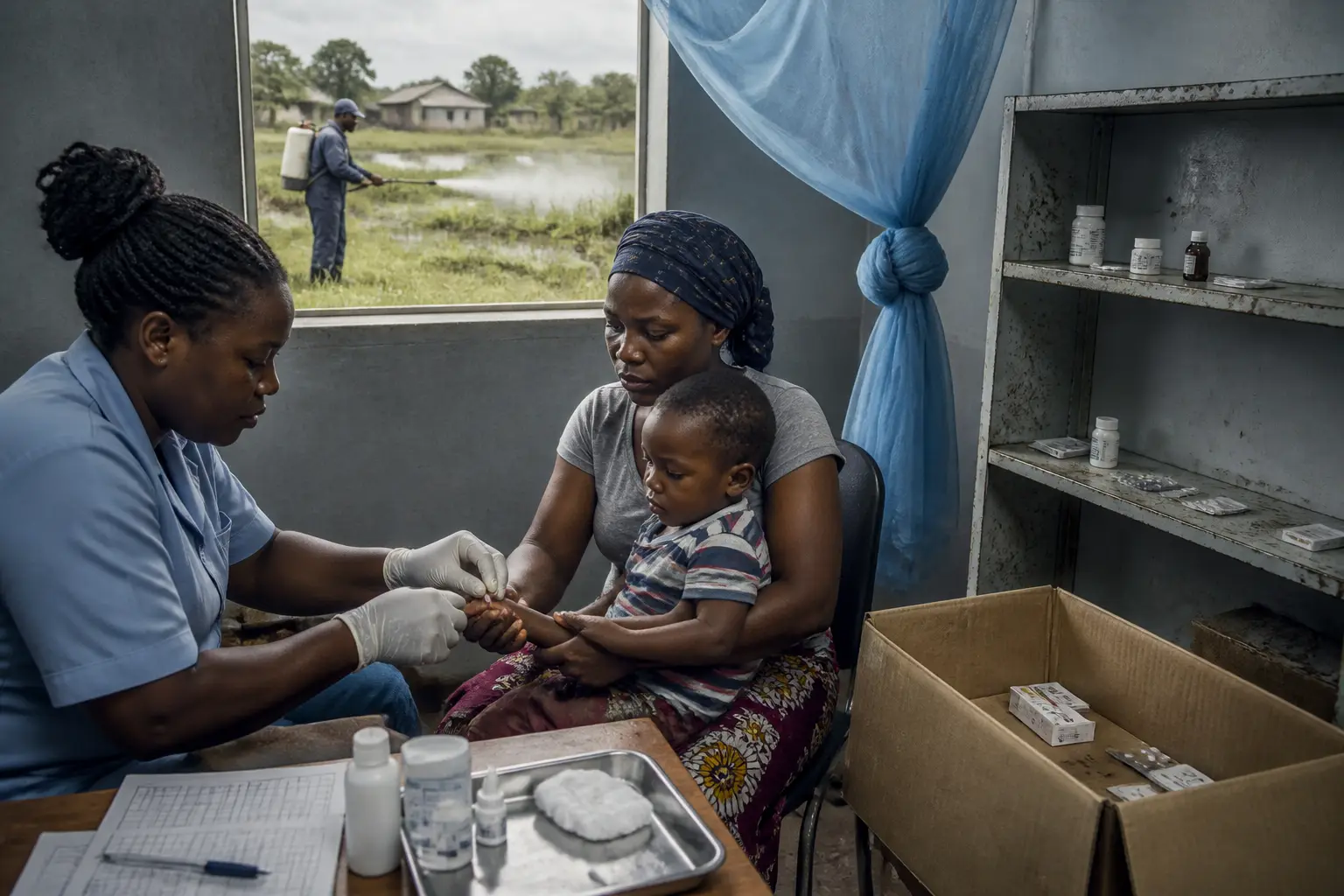
Botswana and neighboring countries report rising malaria cases as external funding declines and mosquito resistance increases.
Botswana recorded 2,223 malaria cases and 11 deaths in the first 23 weeks of 2025, a sharp increase from 290 cases and one death in 2024. Many districts had seen no local malaria cases since 2010, but the disease returned due to a combination of factors. Namibia and Zimbabwe also experienced significant rises, with over 95,000 and 156,000 cases respectively in 2025, according to government data. These increases highlight the challenges faced by countries that had previously made progress in malaria elimination efforts.
Health assistance to Africa has fallen by about 70% since 2021, with further reductions projected by the end of 2026. Modelling suggests a 30% cut in malaria funding could lead to 146 million additional cases and 397,000 deaths by 2030, primarily among children under five. This underscores the urgent need for sustained investment in malaria control and elimination programs across the continent. The decline in external funding, combined with the evolving nature of the malaria parasite and mosquito, has created a critical situation that requires immediate attention and support.
Why it matters
The reduction in funding coincides with rising malaria cases in Botswana, Namibia and Zimbabwe.
This section reflects Dumpling editorial interpretation and is provided for context only.
What to watch
Watch whether bridge financing is secured during the transition phase.
This section reflects Dumpling editorial interpretation and is provided for context only.