
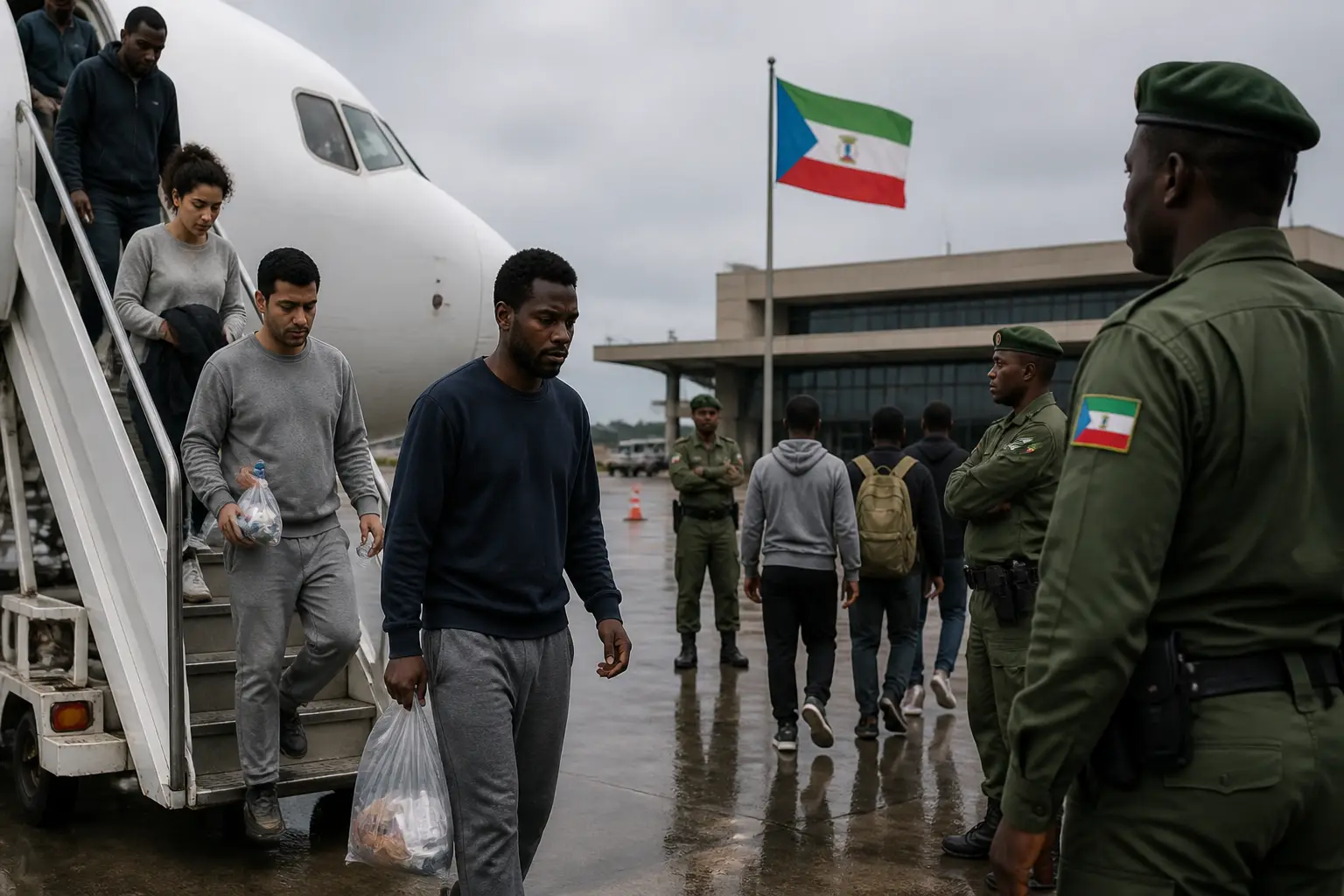
The US has sent at least 65 third country nationals to Equatorial Guinea, where they are often sent back to the countries they fled, according to reports.
Refugees from third countries are being sent to Equatorial Guinea, where they are often returned to the very countries they fled, despite US immigration judges having granted protection to nearly all of them due to the high risk of persecution or torture they face in their countries of origin. Adam, a 26-year-old refugee, was confined alone in a hotel room in Malabo, under constant surveillance by security officers and soldiers of an oppressive regime. He was subjected to physical abuse and warned not to speak about his situation. Adam fled his home country to escape indefinite, forced military conscription and abuse during his service. A US immigration judge ruled that he would likely face persecution if returned, but he was later sent to Equatorial Guinea in November 2025, despite having no prior connection to the country.
The Trump administration repurposed $7.5 million to pay the government of Equatorial Guinea to accept third country nationals from the United States, marking a 275% increase in foreign assistance and a significant departure from longstanding US policy against direct aid to a deeply corrupt and abusive regime. Since then, the US government has forcibly transferred at least 65 third country nationals to Equatorial Guinea. Many of these individuals had been granted protection by US immigration judges due to the high risk of harm they face in their countries of origin. However, Equatorial Guinea has been sending them back to the very places they fled. In recent weeks, two refugees who spoke out against detention conditions and police violence were violently assaulted and arrested by Equatorial Guinean police, remaining in custody without communication with their families or legal representatives.
Why it matters
The practice risks undermining international protection standards by exposing refugees to potential retribution from their home countries.
This section reflects Dumpling editorial interpretation and is provided for context only.
What to watch
Watch whether the detainees in police custody are released or face prolonged incommunicado detention.
This section reflects Dumpling editorial interpretation and is provided for context only.