
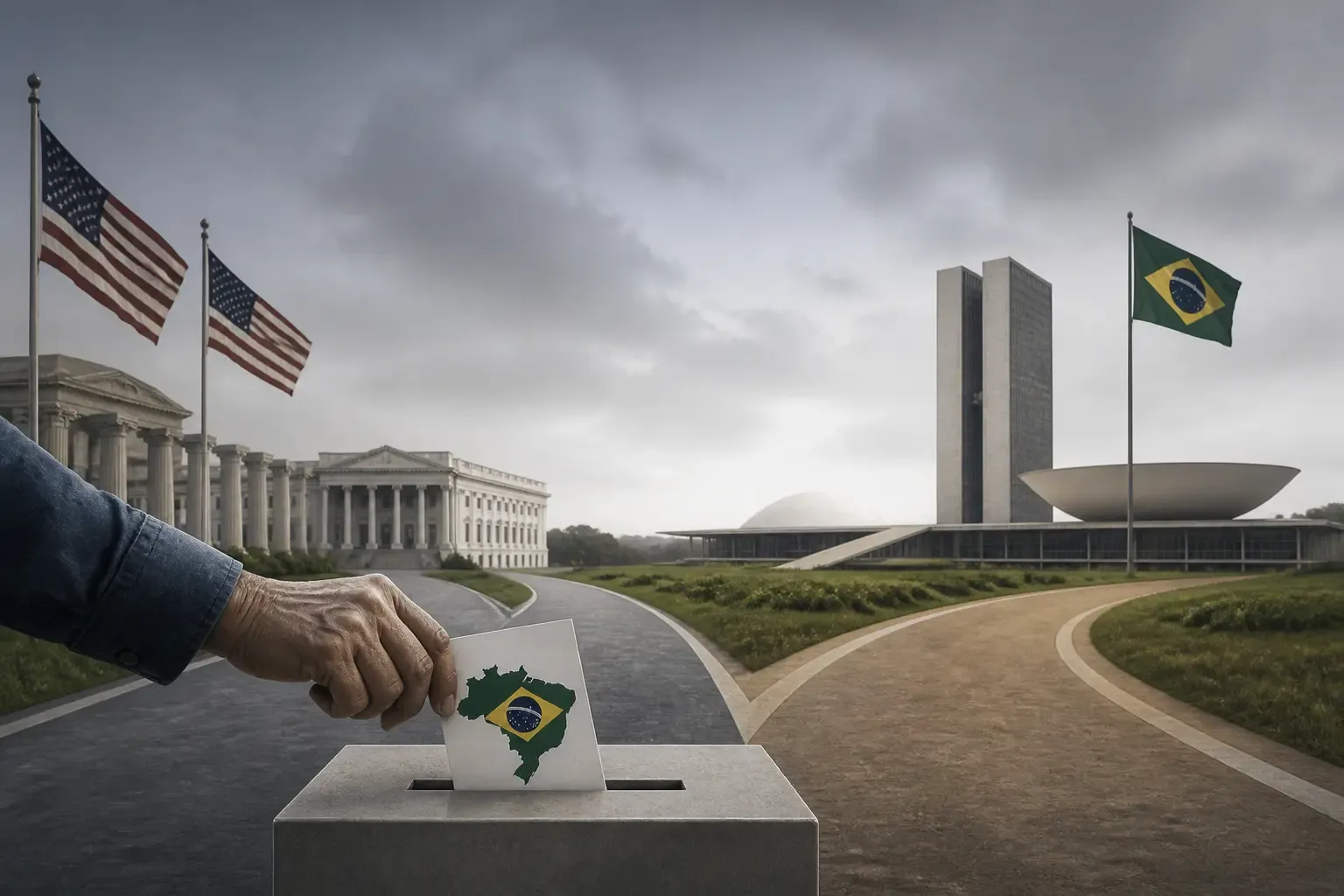
Brazil's President Luiz Inácio Lula da Silva has reinforced his country's position of independence from US influence following his election victory, despite a complex relationship with former US President Donald Trump.
Lula's campaign emphasized resistance to perceived US interference in Brazilian affairs, resonating with voters and boosting his approval ratings. His rhetoric on sovereignty and opposition to US involvement in Brazil's judicial processes contrasted with the policies of his predecessor, Jair Bolsonaro. Lula's defiant message, delivered in his election victory speech, highlighted Brazil's rejection of foreign influence, a stance that aligned with his broader political identity as a former union leader challenging powerful figures.
Despite initial tensions, including Trump's imposition of tariffs on Brazil, Lula's assertive stance led to a reduction in those tariffs and improved diplomatic relations. The two leaders have since engaged in discussions at international forums, including the United Nations and the Oval Office. Trump acknowledged Lula's election, expressing that they get along well, though he criticized the election as "terrible" and "rigged." The improved relations followed Lula's public defiance of US actions, including his use of symbolic gestures like wearing a blue cap reading "Brazil belongs to Brazilians."
Why it matters
Lula's victory reinforces Brazil's strategic independence, affecting US influence in Latin America and shaping regional alliances.
This section reflects Dumpling editorial interpretation and is provided for context only.
What to watch
Future interactions between Lula and Trump, particularly regarding trade policies and diplomatic engagements, will be key indicators of their evolving relationship.
This section reflects Dumpling editorial interpretation and is provided for context only.