
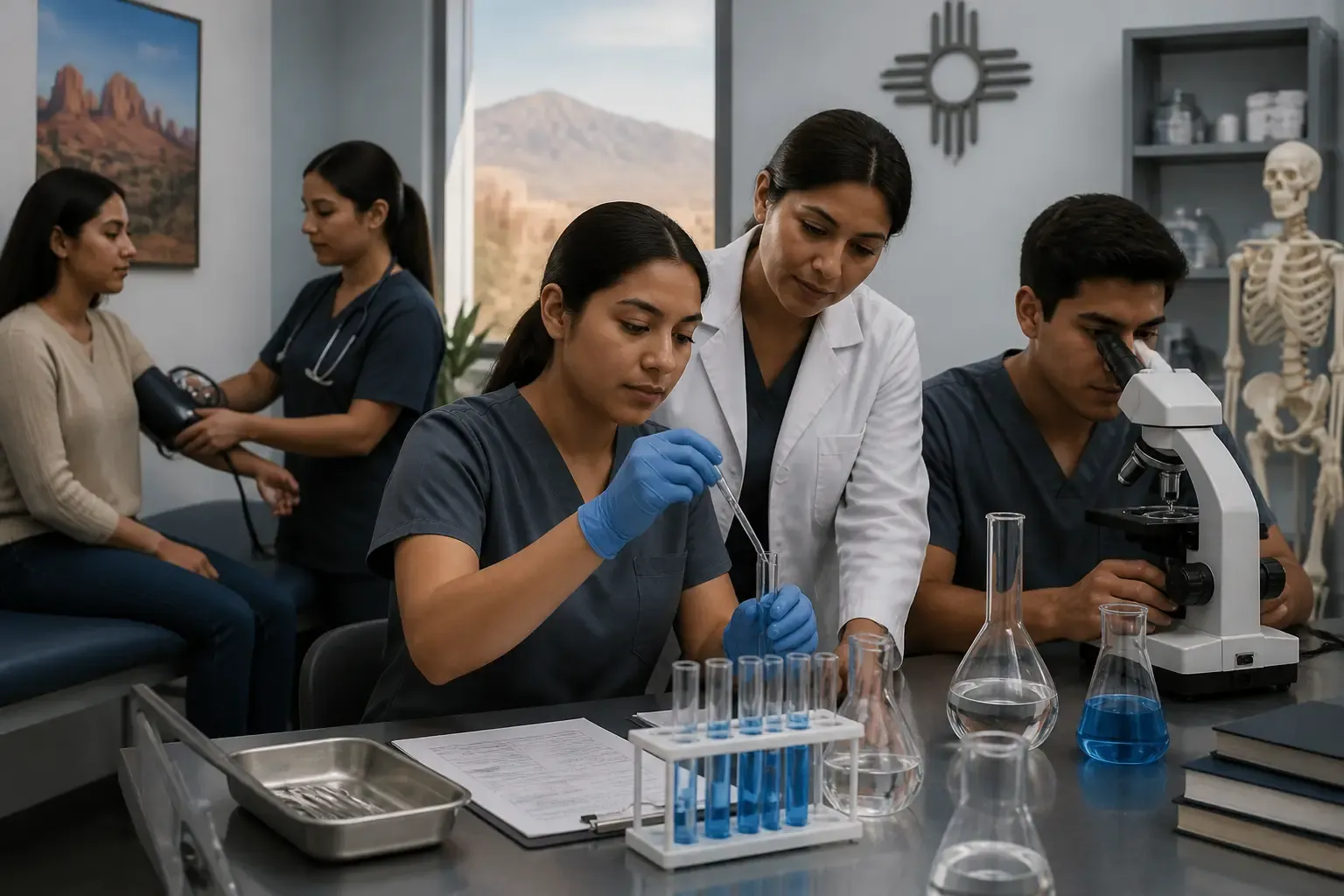
A primary care clinic in Albuquerque, New Mexico, trains bilingual health apprentices to address a critical shortage of healthcare workers in Spanish-speaking communities.
Casa de Salud, a primary care clinic in Albuquerque, trains college and high-school students as bilingual health apprentices to serve Spanish-speaking communities facing a severe healthcare workforce shortage. These apprentices perform tasks such as taking vitals, running needle exchanges, and distributing fentanyl test strips, while also learning to address patients' trauma and past neglect.
The clinic's year-long apprentice program, established in 2005, has trained over 300 students, many of whom come from marginalized backgrounds. At least a third of graduates have entered the healthcare field, with more than half attending medical school. The program emphasizes cultural and linguistic competence, aiming to increase representation of underrepresented groups in healthcare.
Why it matters
Bilingual health apprentices help bridge communication gaps in care delivery for non-English-speaking patients.
This section reflects Dumpling editorial interpretation and is provided for context only.
What to watch
Watch whether Casa de Salud expands its bilingual apprentice program to other clinics.
This section reflects Dumpling editorial interpretation and is provided for context only.