
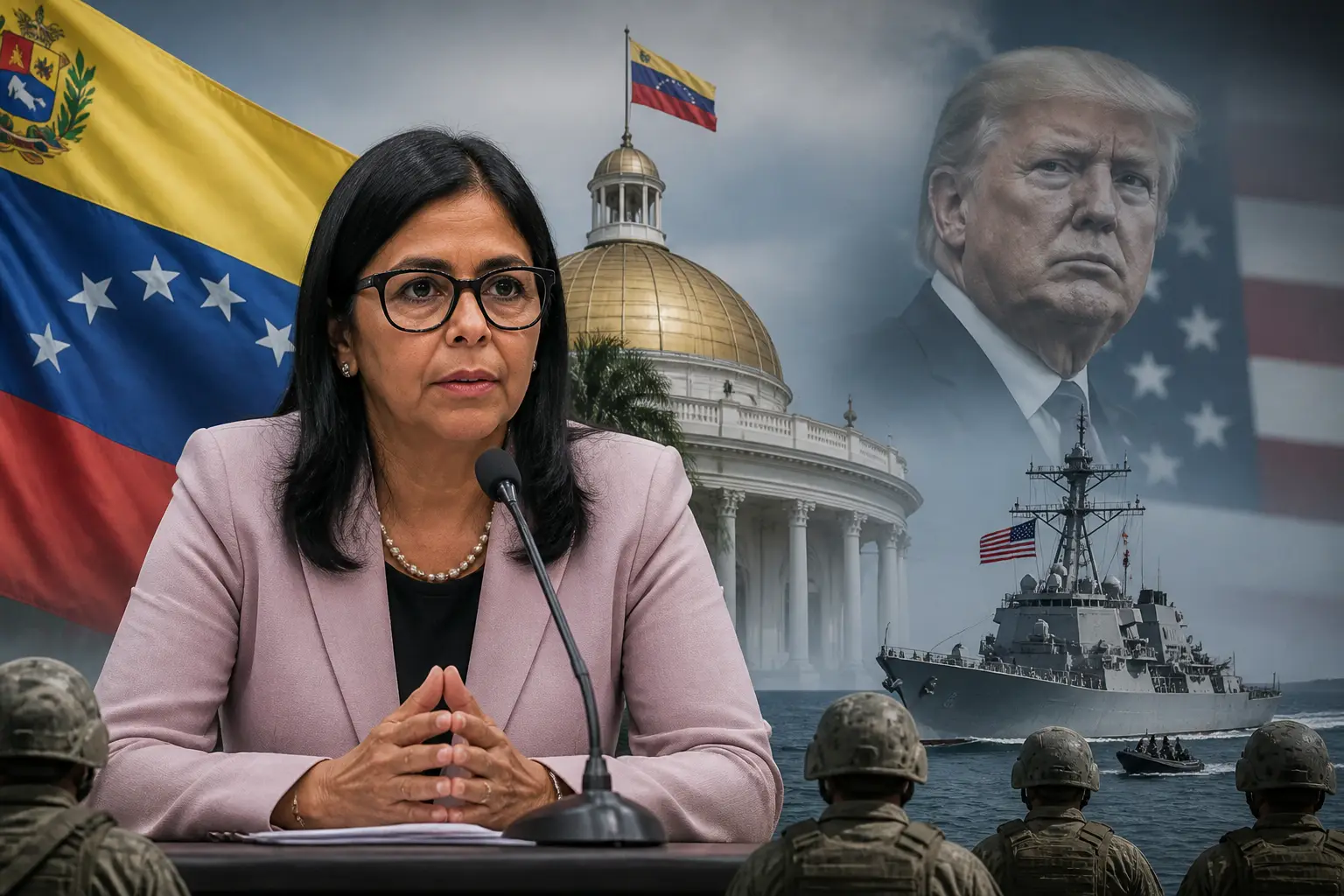
Venezuela's interim president, Delcy Rodríguez, has remained in power eight months after Trump's decision to remove Nicolás Maduro, despite expectations of a transition to María Corina Machado.
Delcy Rodríguez, now 57, became Venezuela’s interim leader two days after the downfall of Nicolás Maduro, who was abducted by US special forces on 3 January this year. Trump instead supported Rodríguez, Maduro’s vice-president, over María Corina Machado, the opposition leader who had won the 2024 election. Rodríguez’s rise to power began in 2002, when she was a junior diplomat and student in London. At the time, she sought to help BBC journalists report on the failed coup that briefly removed President Hugo Chávez. Her efforts during that period marked the beginning of her political journey, which eventually led her to a prominent role in Venezuelan politics.
Trump’s decision to abduct Maduro led to Rodríguez assuming power, and she has remained in place with no indication of fresh presidential elections being called. Imdat Oner, a former Turkish diplomat in Caracas, believes Rodríguez is likely to stay in the presidency for at least four or five more years. Despite her current position, Rodríguez’s early career was shaped by her father, Jorge Antonio Rodríguez, a Marxist activist who died in police custody in 1976. While her father was known among Chavistas, Rodríguez herself was not widely recognized until she began making her mark in Venezuelan politics during the 2002 events.
Why it matters
Rodríguez’s continued leadership affects Venezuela’s political trajectory and Trump’s influence over the country’s governance.
This section reflects Dumpling editorial interpretation and is provided for context only.
What to watch
Whether Rodríguez will face challenges to her leadership or if Trump will announce further actions in Venezuela.
This section reflects Dumpling editorial interpretation and is provided for context only.