
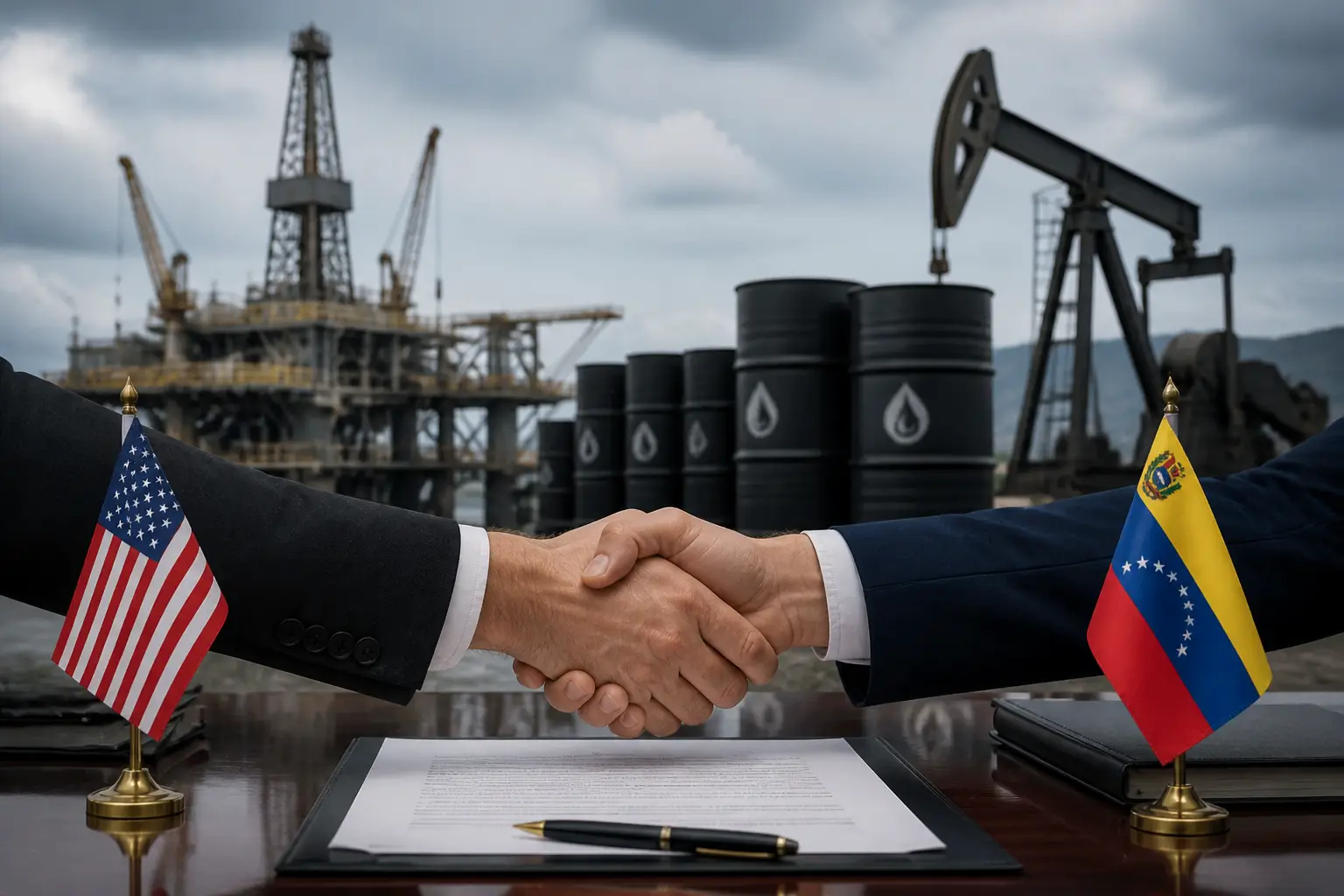
A new US-Venezuela oil deal grants a US-led company 100-year concessions over 17 oilfields, amounting to 65 billion barrels of crude, a move that has drawn mixed reactions from analysts and Venezuelans.
The agreement, signed in Caracas, marks the culmination of US President Donald Trump's stated goal of securing control over Venezuela's oil resources. The deal grants a US-led company 100-year concessions over 17 oilfields, which account for more than a fifth of Venezuela's proven oil reserves. The US government will work alongside a private Venezuelan firm, North American Blue Energy Partners (Nabep), with the US holding veto power over the appointment of Nabep's board of directors and requiring a majority of its board to be US citizens.
While both the US and Venezuelan governments have praised the deal as a success, critics have raised concerns about its terms. Former US special representative Elliott Abrams called the agreement a 'fever dream of what colonialism looks like,' arguing that it gives away 20% of Venezuela's national patrimony for nothing. The deal's long-term impact and potential pitfalls remain unclear.
Why it matters
The deal significantly alters Venezuela's energy landscape and reinforces US influence in the region, affecting both nations' economic and geopolitical strategies.
This section reflects Dumpling editorial interpretation and is provided for context only.
What to watch
The implementation of the agreement's terms, particularly the US government's role in Nabep's governance and the long-term economic effects on Venezuela.
This section reflects Dumpling editorial interpretation and is provided for context only.