
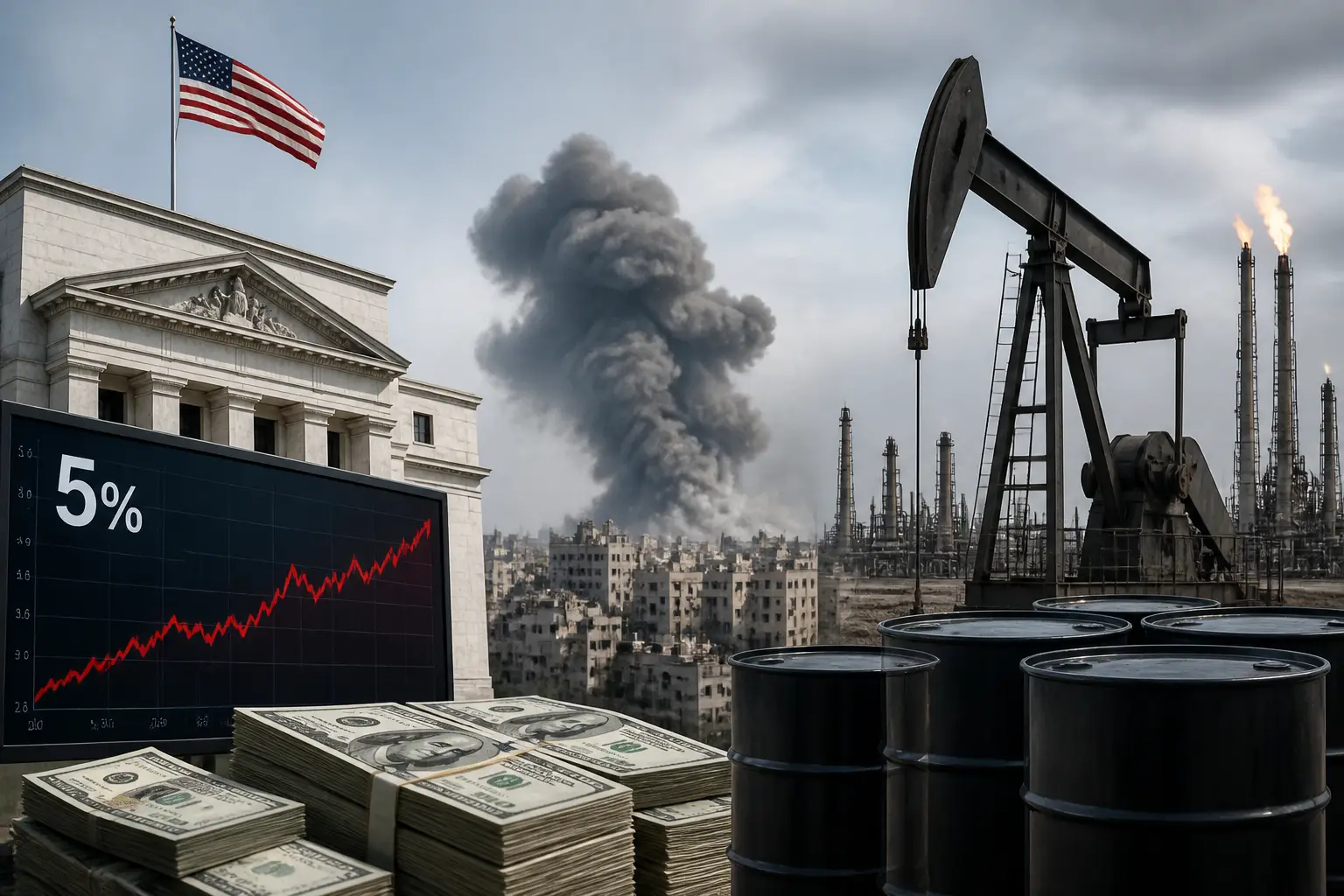
US government borrowing costs have reached 5% for the first time since 2023, driven by rising oil prices linked to Houthi attacks on Saudi infrastructure and the ongoing Middle East conflict.
Oil prices exceeded $108 a barrel following drone attacks by Houthi forces on Saudi infrastructure, prompting concerns over inflation and triggering a sell-off in global bond markets. The yield on 10-year US Treasury bonds hit 5%, a level not seen since October 2023, amid renewed selling pressure on Wall Street.
The increase in oil prices follows the capture of the strategic island of Perim in the Bab al-Mandab strait by Houthi forces and the postponement of a meeting between Gulf states and Iran to discuss a temporary shipping lane through the Strait of Hormuz. Traders warn that Saudi Arabia may exhaust its oil reserves for export if the east-west pipeline remains closed.
Why it matters
Rising borrowing costs and oil prices impact global financial markets and increase economic pressures on households and businesses worldwide.
This section reflects Dumpling editorial interpretation and is provided for context only.
What to watch
The US Federal Reserve's interest rate decision on Wednesday and the Bank of England's decision on Thursday will be closely monitored for further market signals.
This section reflects Dumpling editorial interpretation and is provided for context only.