
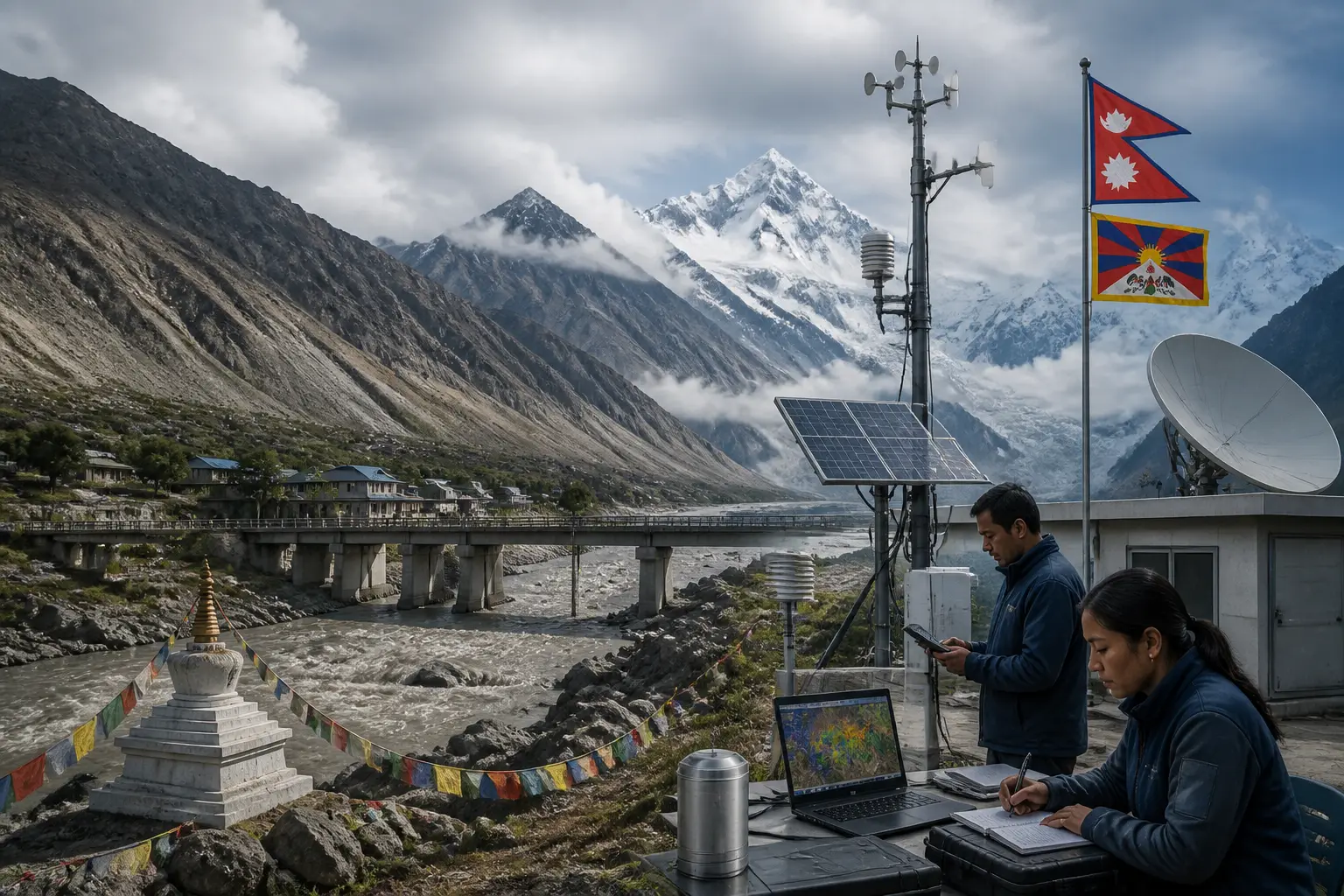
A scientific study has linked the collapse of a massive glacier in August to global heating, which triggered catastrophic floods in Nepal and Tibet, killing more than 1,300 people.
Scientists identified unusually warm conditions as a destabilising factor in the collapse of a 200,000 square metre glacier on Langtang Lirung mountain. The collapse sent an avalanche of 110 million cubic metres of snow and ice into the valley, triggering flash floods that hit communities downstream without warning.
The study highlights that the disaster was the result of a compound crisis, with climate breakdown exacerbating long-term changes around the glacier. The event is described as rare, with annual frequency estimates of one such occurrence every 1,000–10,000 years. The floods destroyed homes, roads, and bridges, leaving survivors stranded and cut off.
Why it matters
Nepal's communities are facing severe consequences from climate-driven disasters linked to emissions far beyond their borders.
This section reflects Dumpling editorial interpretation and is provided for context only.
What to watch
Future research may track the long-term impact of glacier destabilisation on regional flood risks and adaptation strategies.
This section reflects Dumpling editorial interpretation and is provided for context only.