
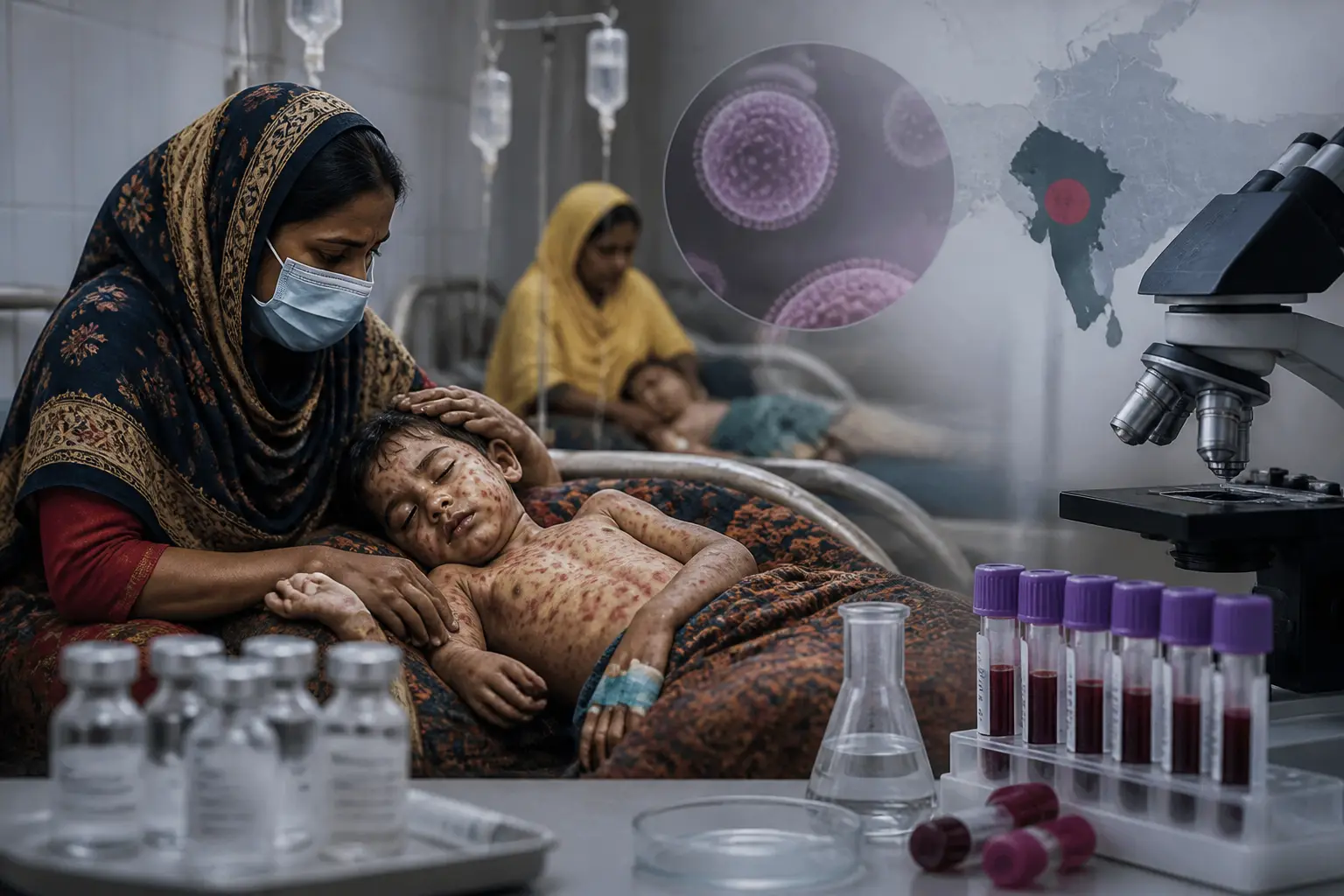
Bangladesh's measles outbreak has killed more than 1,000 children since March, with health officials citing vaccination drive failures as a contributing factor.
Bangladesh's Directorate General of Health Services reports 1,002 child deaths and 187,484 infections since March, marking the country's deadliest measles outbreak in decades. Health officials attribute the crisis to gaps in a mass vaccination campaign, with four million children reportedly left unvaccinated. The outbreak has been exacerbated by challenges in reaching remote and underserved communities, where access to healthcare services is limited.
Measles is highly contagious and can lead to severe complications such as brain swelling and breathing difficulties. Health authorities have vaccinated over 18 million children but admit they failed to achieve herd immunity. The outbreak is also straining the healthcare system, which is simultaneously managing a surge in dengue fever cases. Hospitals are overwhelmed, with some facilities reporting patient numbers far exceeding their capacity. Officials emphasize the need for continued vaccination efforts and address underlying factors such as malnutrition, which can worsen the disease's impact.
Why it matters
The outbreak highlights the vulnerability of Bangladesh's healthcare system and the risks posed by incomplete vaccination campaigns.
This section reflects Dumpling editorial interpretation and is provided for context only.
What to watch
Health officials will need to address chronic malnutrition and improve vaccination coverage to control the outbreak.
This section reflects Dumpling editorial interpretation and is provided for context only.