
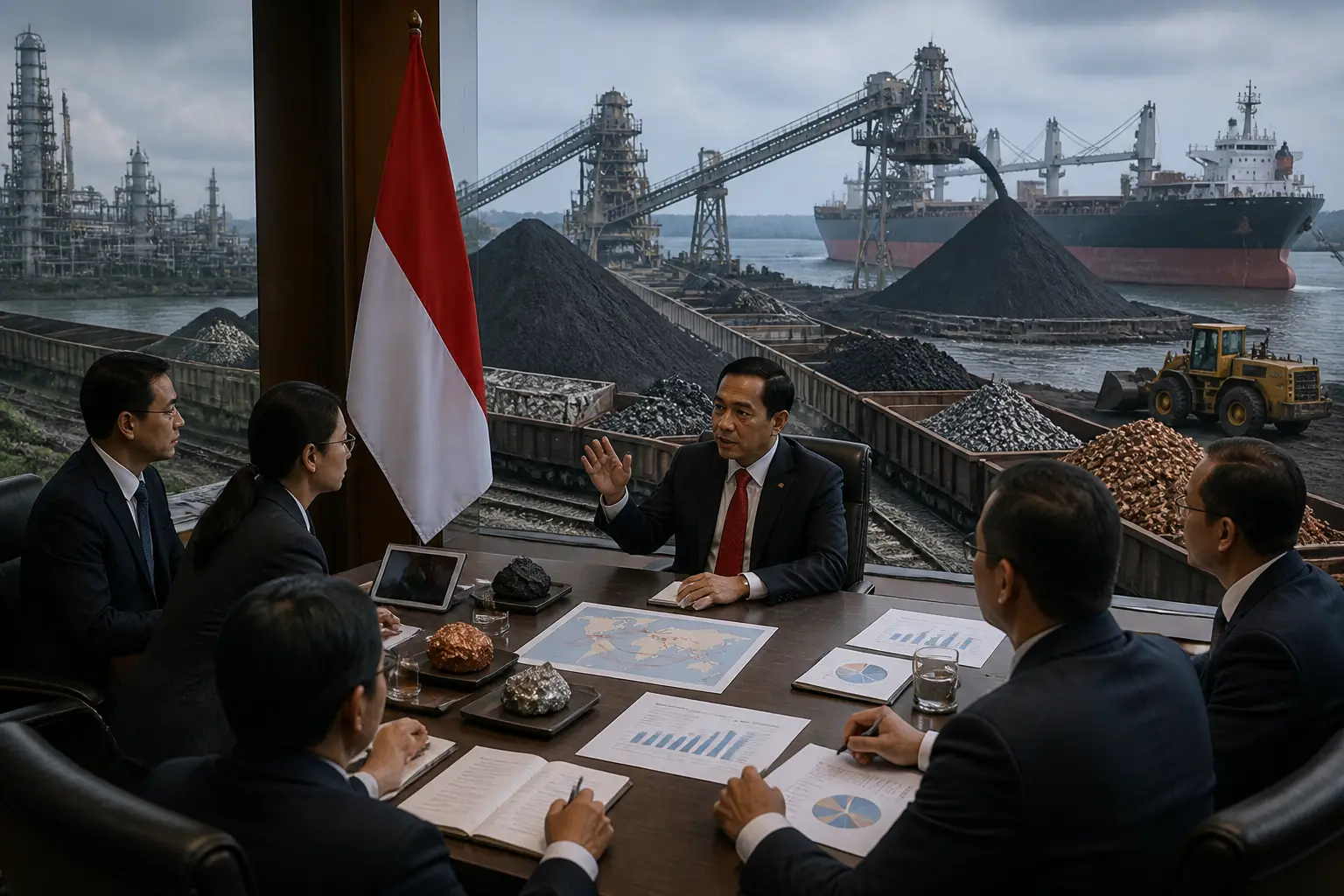
Indonesia aims to increase its control over commodity prices through a new exchange, but success depends on convincing producers and traders to use it.
President Prabowo Subianto announced the plan for a new commodity exchange during his 2027 budget speech, where lawmakers strongly supported the initiative, expressing frustration that commodity prices for Indonesia’s key exports are often determined abroad. The exchange, scheduled to launch on January 1, aims to exert greater influence over the pricing of nickel products, palm oil, and coal—three of Indonesia’s most significant exports. The initiative seeks to establish a local benchmark for these commodities, allowing Indonesia to play a more central role in global markets.
Industry responses have been mixed. The Indonesian Nickel Miners Association, which has long advocated for a national mineral exchange, welcomed the plan but stressed the need for data integrity and clear governance. In contrast, the Indonesian Palm Oil Association (GAPKI) stated that most of its members currently prefer direct deals with buyers rather than listing on a commodity exchange. The Indonesian Coal Miners Association (APBI) has not yet commented, saying it is still monitoring how the plan will be implemented. Indonesia holds the world’s largest nickel reserves and is the leading exporter of thermal coal and palm oil, making the success of this exchange a key economic priority for the nation.
Why it matters
The exchange's success depends on whether producers and traders adopt it before it can affect prices.
This section reflects Dumpling editorial interpretation and is provided for context only.
What to watch
Watch for the exchange's ability to influence nickel product, palm oil, and coal prices after launch.
This section reflects Dumpling editorial interpretation and is provided for context only.