
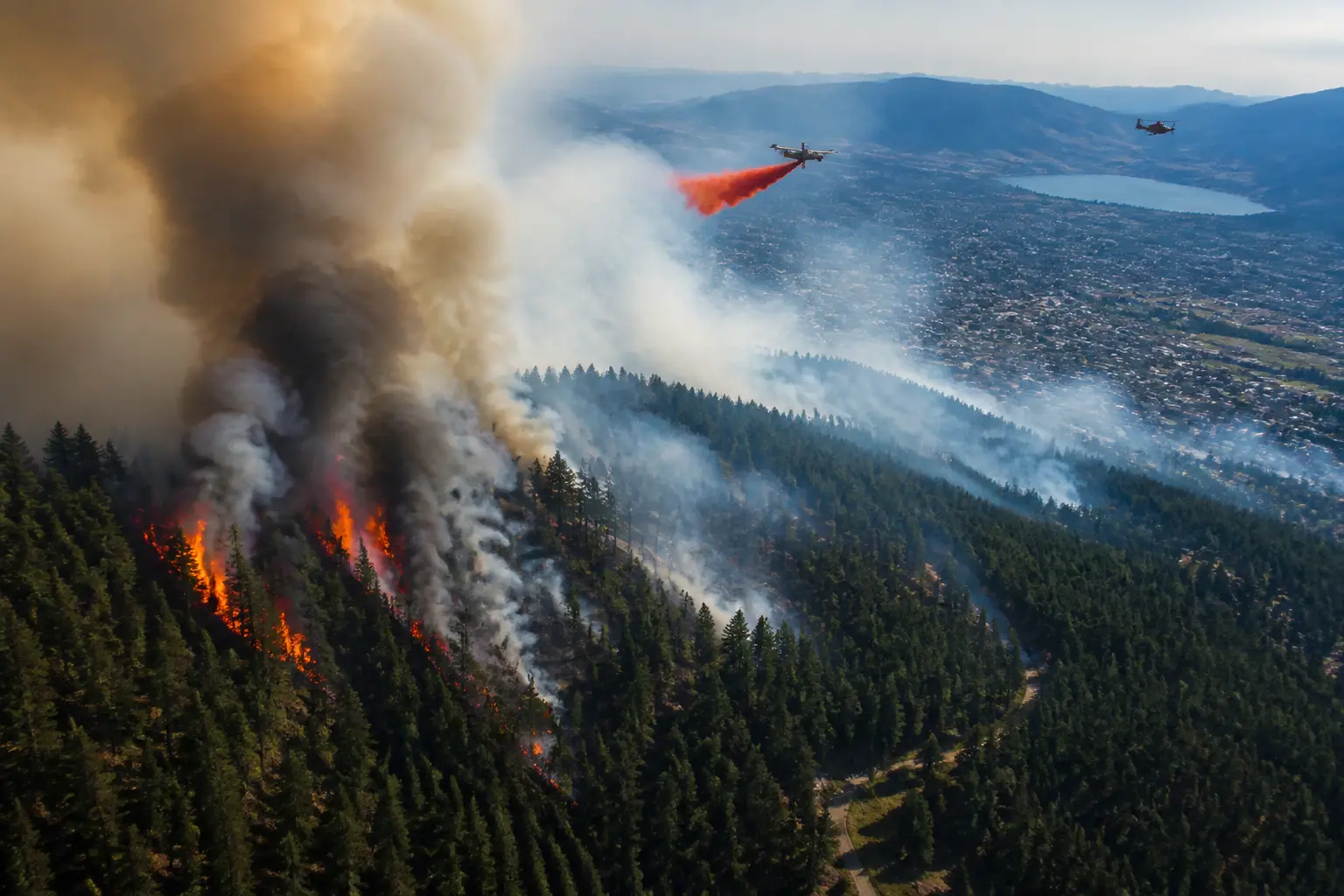
France and Spain face historic wildfires, with leaders likening the crisis to World War II, though pre-emptive measures remain absent.
France and Spain are dealing with wildfires described as historic, prompting comparisons to World War II. The French president has called the situation the most difficult since the war, with evacuation efforts among the largest in Europe since that time. Emergency aircraft, black smoke, and damaged towns have created a war-like atmosphere. Similar wildfires are occurring across Europe, with Australia, the US, and other regions also experiencing severe fire events. Leaders in Europe have linked the fires to the climate emergency, but less so in Canada and the US. The connection between these events and the continued use of fossil fuels is rarely made in public discourse.
Residents in British Columbia have experienced intense wildfire activity, with evacuation alerts and large-scale water-bomber operations becoming routine. The scale of these events has led some to describe them as the new normal, though they are not typical and signal worsening conditions. While responses to the fires have been largely defensive, there is no widespread pre-emptive action to address the root causes. Discussions about fire preparedness and resilience are common, but the need for a more fundamental shift in energy use remains underemphasized. The current approach focuses on managing the aftermath rather than preventing future crises.
Why it matters
The lack of pre-emptive action on the climate crisis highlights a critical gap in global emergency response strategies.
This section reflects the Daily Dumpling editorial team's personal interpretation and is provided for general reference only.
What to watch
Public and political discourse on the link between fossil fuel use and increasing wildfire severity may shape future climate policies.
This section reflects the Daily Dumpling editorial team's personal interpretation and is provided for general reference only.