
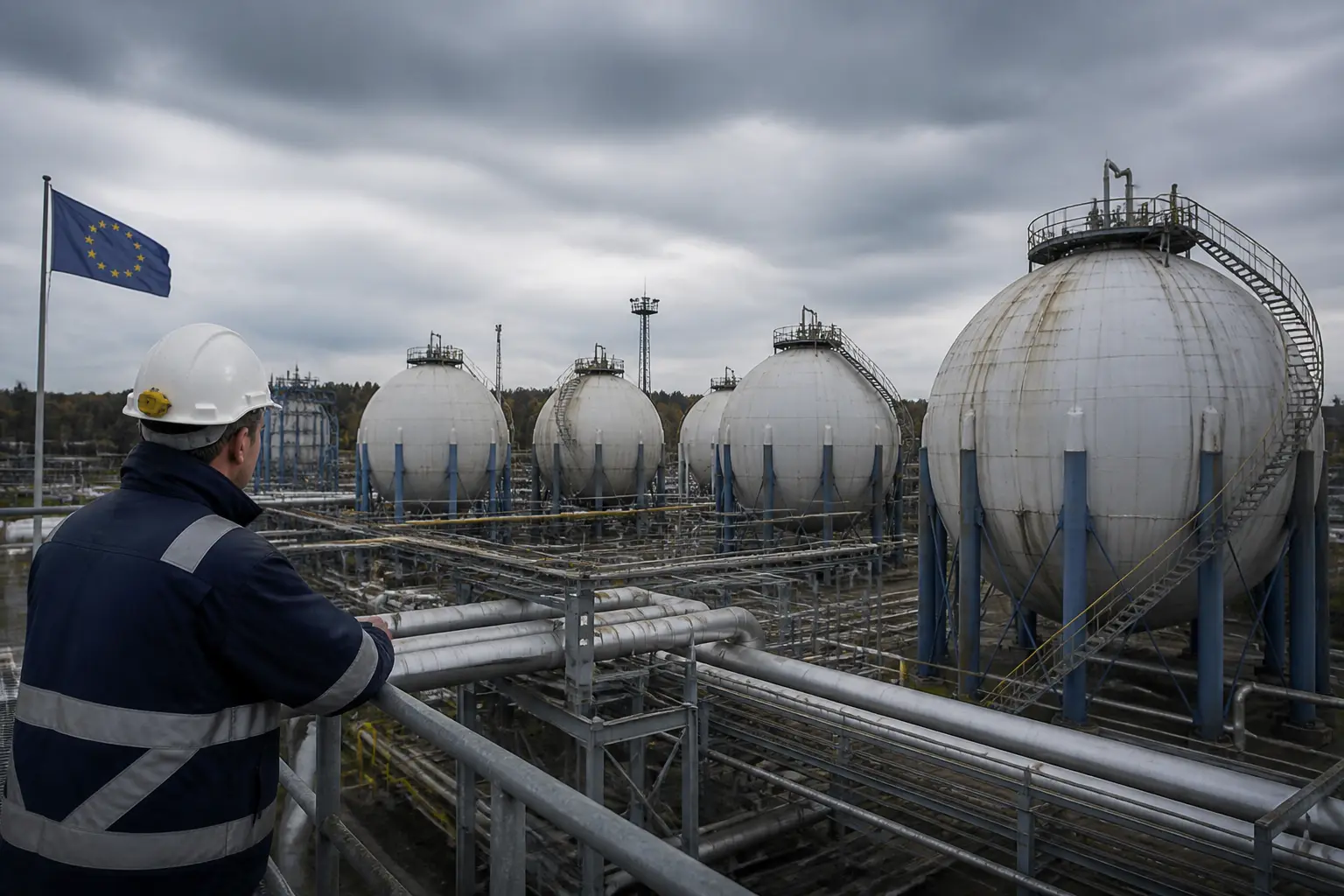
European gas reserves are at their lowest level in 13 years as the continent prepares for winter, raising concerns about potential price volatility and energy security.
The EU’s gas storage levels stood at 63% in late August, significantly below the 80% average for this time of year and the lowest recorded since 2013. This has prompted warnings from analysts about increased price volatility during the colder months. The current rate of gas storage injections suggests that the EU will enter the winter heating season with gas stocks about a fifth below the five-year average. Experts have noted that low storage levels naturally increase the risk of heightened winter price volatility, which could be exacerbated by cold spells or slow wind patterns that increase gas usage over the winter.
The UK, a major gas consumer with limited domestic storage capacity, is particularly vulnerable. Reliance on imports from the US and Middle East has left the country with nearly empty reserves. Disruptions from the US-Israel war on Iran and increased gas use during summer heatwaves have further depleted European reserves. In a typical year, storage facilities are filled during the summer when demand and prices are lower, but this has not been the case this year. The UK’s exposure to market volatility is heightened due to its reliance on external gas supplies, and the situation has raised concerns among energy traders and analysts about potential price increases during the winter months.
Why it matters
UK gas demand remains high as winter approaches, but an EU-wide target does not establish an individual country's supply position or consumer-price effect.
This section reflects Dumpling editorial interpretation and is provided for context only.
What to watch
Watch for import and storage data in subsequent official updates.
This section reflects Dumpling editorial interpretation and is provided for context only.