
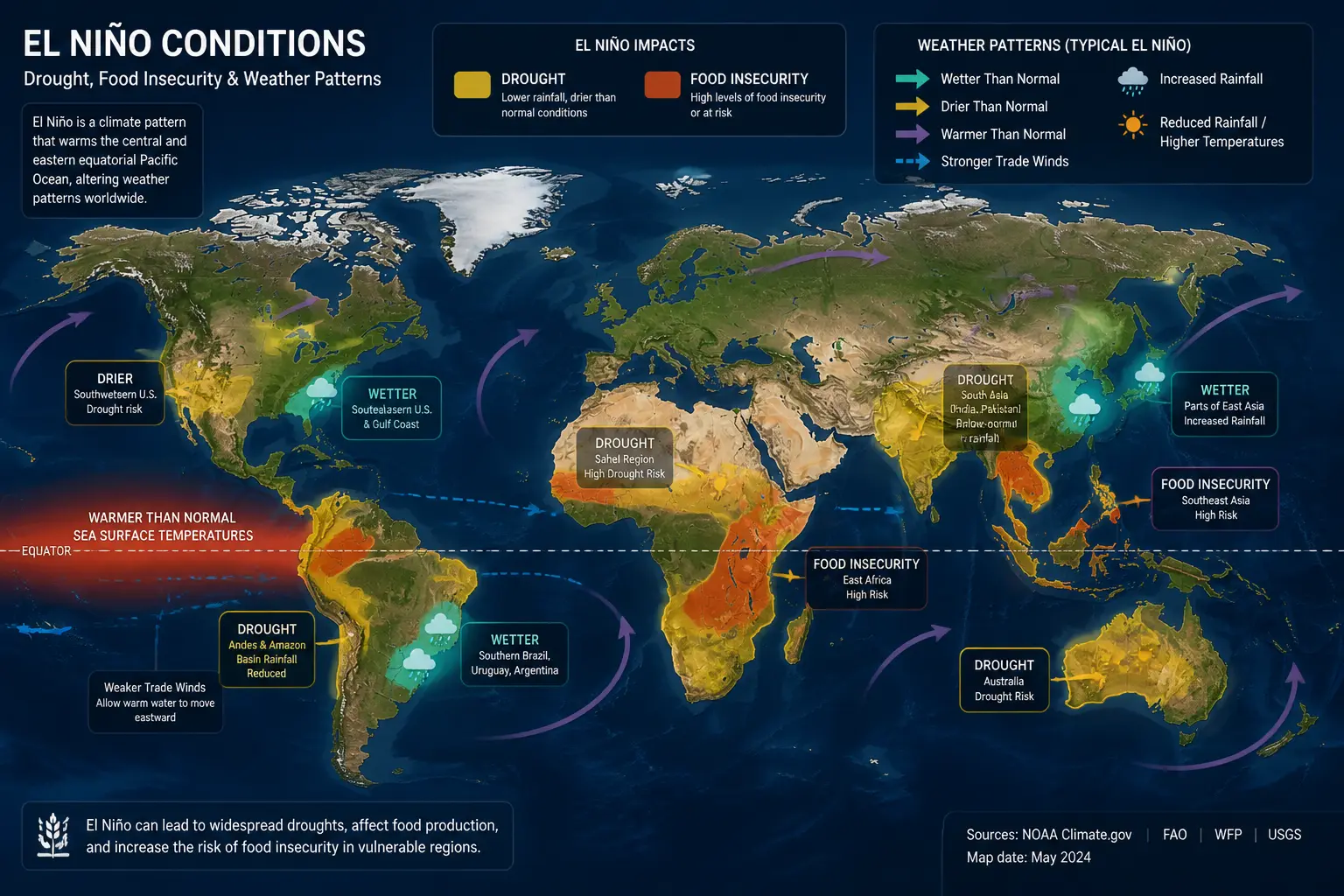
A growing El Niño weather system is expected to worsen food insecurity in 45 countries, potentially affecting millions more.
Forecasters warn that the developing El Niño weather system could push up to 50 million people into acute hunger before the end of next year. This would add to the hundreds of millions already facing severe food insecurity due to prolonged drought and rising food prices. The United Nations’ World Food Programme has highlighted that even a weaker El Niño than predicted could significantly worsen conditions in 45 countries already struggling with food shortages. Central and South America, the Caribbean, and southern Africa are expected to be the most affected regions. Reduced rainfall in parts of south and southeast Asia could also disrupt agriculture.
The current El Niño is likely to be among the strongest in decades, with its impacts amplified by the ongoing climate crisis. The WFP is working to mitigate the effects through early warning systems and anticipatory relief efforts, though challenges remain due to limited data and funding. The consequences will still be far-reaching, as farmers may take more than one season to exhaust their food supplies. In southern Africa, for instance, the main growing season stretches from October this year to March 2027, but the worst impacts will likely occur during the lean season following the harvest. The WFP is budgeting at least $80 million for these efforts, but success depends on timely and adequate support.
Why it matters
The potential scale of hunger linked to El Niño underscores the urgent need for global preparedness and resource allocation.
This section reflects the Daily Dumpling editorial team's personal interpretation and is provided for general reference only.
What to watch
The effectiveness of early warning systems and international aid efforts in mitigating the impact of the El Niño on food security will be critical.
This section reflects the Daily Dumpling editorial team's personal interpretation and is provided for general reference only.