
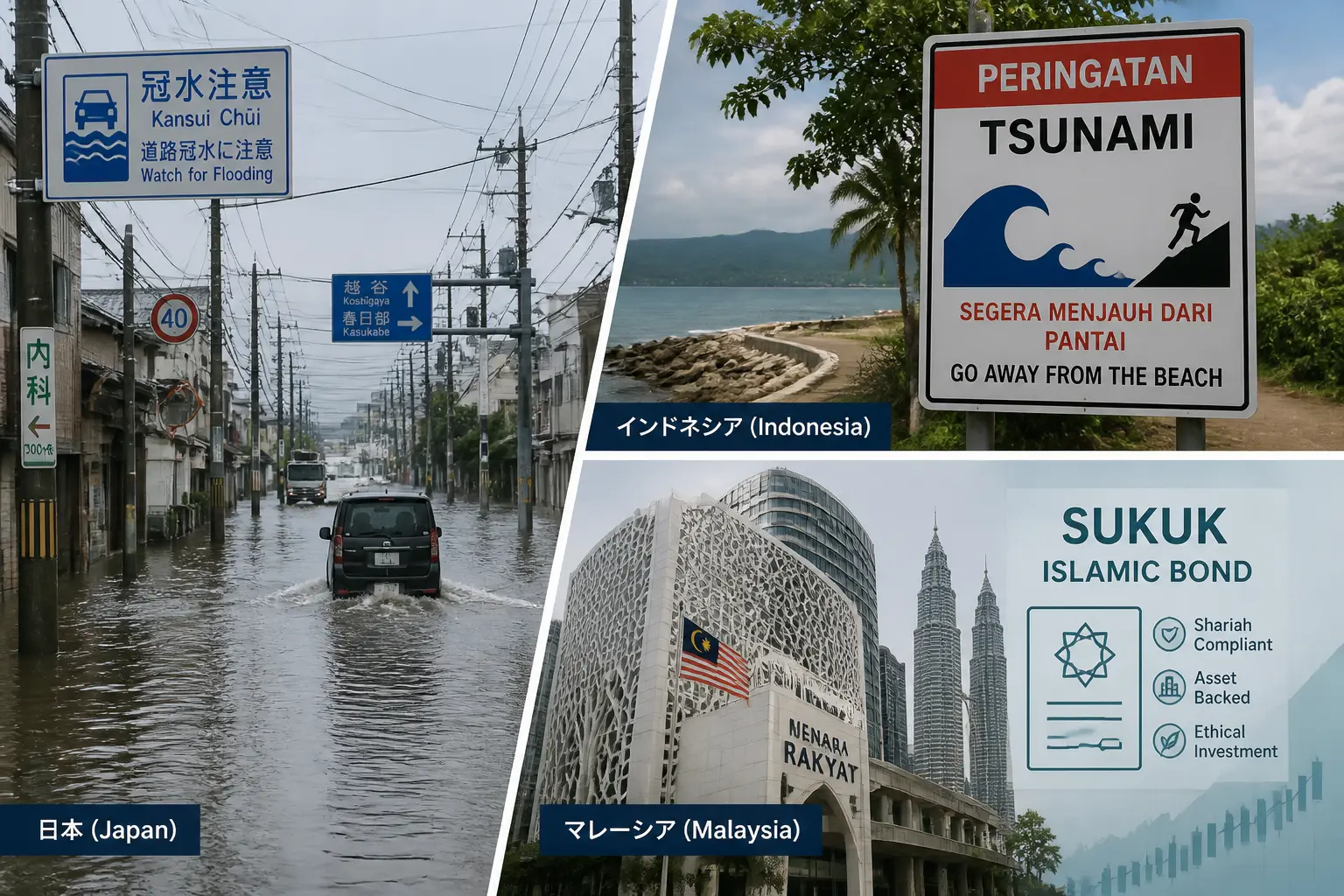
Japan faces extreme weather, Indonesia deals with a powerful earthquake, and Malaysia's economic recovery is under scrutiny. Other stories include AI advancements, budget proposals, and aging population initiatives.
Japan is grappling with unprecedented rainfall, leading to fatalities, power outages, and thousands stranded at Tokyo’s Narita airport. Meanwhile, Indonesia has been hit by a 7.7-magnitude earthquake, triggering a tsunami warning and prompting evacuations. In Malaysia, a successful sukuk issuance is seen as a sign of economic recovery, though challenges remain. Other developments include AI progress in China and a proposed budget in Indonesia.
Across the region, the interplay of natural disasters, economic policy, and technological innovation continues to shape the Asia Pacific landscape. These events highlight the region’s vulnerability to climate and seismic risks, as well as its resilience in economic and social domains.
1. Unprecedented rain kills five in Japan, thousands stranded at airport
Japan is experiencing extreme weather as “unprecedented” heavy rain has killed at least five people and left nearly 7,000 stranded at Tokyo’s Narita airport. The torrential rains hit Chiba prefecture, east of Tokyo, triggering evacuation orders for over 400,000 people and causing widespread power outages. Landslide warnings have been issued, and the situation remains critical as authorities work to manage the crisis.
The impact of the flooding has been felt across the region, with thousands seeking refuge in government buildings and infrastructure struggling to cope with the scale of the disaster. The Japanese government has activated emergency response protocols, but the full extent of the damage is still being assessed.
Why it matters
Flooding in Chiba prefecture forces 400,000 to evacuate and causes power outages, but the available facts do not establish the next outcome.
What to watch
Watch for official follow-up that clarifies the next steps, timing and measurable effects of this development.
Sources: The Guardian Asia · BBC Asia
2. Strong 7.7-magnitude earthquake strikes eastern Indonesia, tsunami warning issued
A powerful 7.7-magnitude earthquake struck eastern Indonesia, triggering a tsunami warning and prompting hundreds to evacuate. The quake hit Indonesia’s Flores region at a depth of 10km, followed by two aftershocks, including one with a magnitude of 6.1. The tremors caused damage to homes and infrastructure, with reports of collapsed buildings and disrupted communications.
Authorities have issued evacuation orders for coastal areas, and emergency services are working to assess the damage and provide aid to affected communities. The situation remains fluid as the region deals with the aftermath of the quake and the potential for a tsunami.
Why it matters
7.7-magnitude quake strikes Flores region and triggers tsunami warning, but the available facts do not establish the next outcome.
What to watch
Watch for official follow-up that clarifies the next steps, timing and measurable effects of this development.
Sources: The Guardian Asia · Channel NewsAsia
3. Malaysia exorcises 1MDB ghost? Markets say yes, but the story is more complex
A successful US$1.5 billion global sukuk issuance is being interpreted as a sign that Malaysia has moved past the 1MDB scandal. However, the situation is more nuanced, with underlying challenges still present. While the sukuk issuance reflects confidence in Malaysia’s financial markets, it does not fully address the political and economic issues that remain unresolved.
The government’s ability to maintain this momentum will depend on its capacity to implement reforms and restore public trust. The sukuk is a positive development, but it is only one part of a broader effort to stabilize the country’s economic and political landscape.
Why it matters
Malaysia’s sukuk issuance is seen as a sign of recovery from 1MDB scandal, but the available facts do not establish the next outcome.
What to watch
Watch for official follow-up that clarifies the next steps, timing and measurable effects of this development.
Source: Channel NewsAsia
On the radar
- China's Z.ai nears Anthropic's Mythos 5 in cyber-defence tests — Chinese AI startup Z.ai claims its GLM-5.3 model has scored 84.5% in identifying software vulnerabilities, positioning it as a strong competitor to Anthropic’s Mythos 5 in cyber-defence applications. Sources: Channel NewsAsia
- Prabowo proposes US$230 billion budget for 2027, targets deficit at 2.4% of GDP — Indonesian President Prabowo Subianto has proposed a 2027 budget of US$230 billion, aiming to keep the deficit at 2.4% of GDP, while also planning to revise citizenship laws to allow dual nationality for some Indonesians. Sources: Channel NewsAsia
- Parkour helping seniors avoid injuries in Singapore — In Singapore, one of the world’s fastest aging countries, seniors are turning to parkour as a way to improve their health and reduce the risk of injury through physical activity and confidence-building. Sources: BBC Asia
- Snowboarding trip inspires Singapore home design — A snowboarding trip to Japan inspired a Singapore couple to incorporate elements of Japanese design into their home, reflecting a blend of cultural influences and aesthetic preferences. Sources: Channel NewsAsia
The Dumpling take
Japan’s unprecedented rainfall has led to deaths and widespread displacement, while a major earthquake in Indonesia has raised fears of a tsunami. Separately, Malaysia’s sukuk issuance is being interpreted as a sign of economic recovery, though challenges remain.
This section is Dumpling editorial analysis, based on the sourced reporting above.