
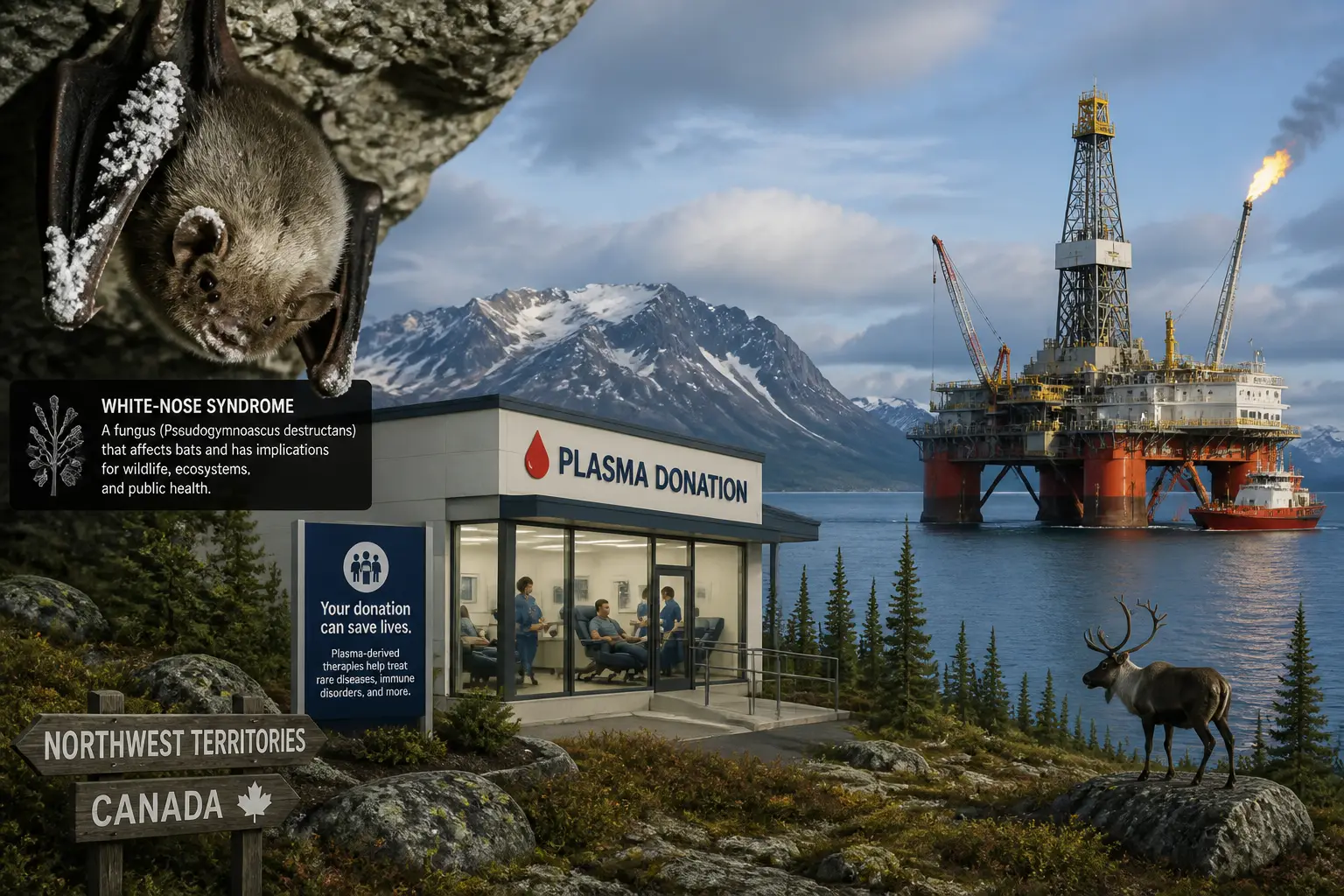
This edition covers a plasma clinic pause in Canada, BP's move in Venezuela, and a deadly fungus spreading in northern Canada. Additional stories include Venezuelan teens in Colombia, Messi's return to play, and stolen Matisse artworks recovered in Brazil.
Across the Americas, health and safety concerns are rising as Canadian plasma clinics pause operations following donor deaths and a government investigation into potential unsafe practices. Meanwhile, BP is moving forward with a major offshore gasfield project in Venezuela, partnering with firms linked to the Trump administration. In northern Canada, a deadly fungus is spreading rapidly among bat populations, raising urgent conservation concerns.
Other developments include Venezuelan teens caught in a disaster in Colombia, Lionel Messi's emotional return to play following his father's death, and the recovery of stolen Matisse artworks in Brazil. These stories highlight the complex interplay of health, energy, and environmental challenges across the region.
1. Canadian plasma clinics pause collections after deaths of two donors
A chain of private plasma donation clinics in Canada has paused collections following the deaths of two donors and a government investigation into potential unsafe practices. Grifols, the Spanish healthcare company that operates 17 clinics across Canada, informed Health Canada of its decision to temporarily halt operations. The move comes amid growing concerns over the safety of plasma donation procedures and the need for regulatory oversight.
The investigation into Grifols follows reports of donor deaths and raises questions about the company's adherence to safety protocols. Health Canada is expected to release findings in the coming weeks, which could lead to changes in plasma donation practices across the country. The pause has sparked debate over the balance between plasma collection and donor safety, with some experts calling for stricter regulations.
Why it matters
Canadian plasma clinics pause collections after donor deaths, but the available facts do not establish the next outcome.
What to watch
Watch for official follow-up that clarifies the next steps, timing and measurable effects of this development.
Source: The Guardian Americas
2. BP to develop offshore gasfield in Venezuela with firms linked to Trump administration
BP has announced plans to develop a large offshore gasfield in Venezuela in partnership with firms linked to the Trump administration. This move marks one of the first major foreign investments in the country since the US ousted President Nicolás Maduro in January. The project is part of a broader effort to rebuild Venezuela's fossil fuel industry, which has been severely impacted by years of economic and political instability.
The partnership with Trump-linked firms has drawn attention from both supporters and critics, with some viewing it as a step toward economic recovery and others raising concerns about the implications for US-Venezuela relations. The project's success will depend on navigating complex political and economic challenges in the region.
Why it matters
BP plans offshore gasfield development in Venezuela, but the available facts do not establish the next outcome.
What to watch
Watch for official follow-up that clarifies the next steps, timing and measurable effects of this development.
Source: The Guardian Americas
3. Killer fungus: how a disease threatening bat species has spread to northern Canada
Bat experts are alarmed by the rapid spread of white-nose syndrome from the US to northern Canada, where it is threatening bat populations. The disease, caused by a fungus, has already been detected in the Northwest Territories, raising concerns about the survival of local bat species. Scientists are working to find a cure before the disease leads to the extinction of several bat species.
The spread of white-nose syndrome has been attributed to human activity, including the movement of infected bats and equipment between regions. Conservationists are calling for increased efforts to monitor and control the spread of the fungus, which has already devastated bat populations in the eastern US.
Why it matters
White-nose syndrome reaches northern Canadian bat colonies, but the available facts do not establish the next outcome.
What to watch
Watch for official follow-up that clarifies the next steps, timing and measurable effects of this development.
Source: The Guardian Americas
On the radar
- Teens who fled Venezuela after deadly quakes caught in another disaster in Colombia — Deivi Delfín and his brother, who fled Venezuela after a deadly earthquake, were caught in another disaster in Colombia. The siblings are now dealing with the emotional and physical toll of multiple disasters. Sources: BBC Latin America
- Messi plays for Inter Miami after father's death — Lionel Messi made a substitute appearance for Inter Miami following the death of his father, hinting he may retire from professional football. The emotional return to play has drawn widespread attention from fans and media. Sources: BBC Latin America
- Stolen Matisse artworks recovered by police in Brazil — Eight stolen artworks by Henri Matisse were recovered in Brazil after a man was arrested at a home in São Paulo. The artworks, estimated to be worth $200,000, were found following a police investigation. Sources: BBC Latin America
The Dumpling take
Today's briefing centers on the main reported developments: Government launches investigation into potential unsafe practices at Spanish healthcare company Grifols A chain of private plasma donation clinics in; Move will be one of first large-scale foreign investments in country since US ousted leader Nicolás Maduro in January BP; and Bat experts were shocked at how fast white-nose syndrome had reached Canada’s northernmost colonies from the US.
This section is Dumpling editorial analysis, based on the sourced reporting above.