
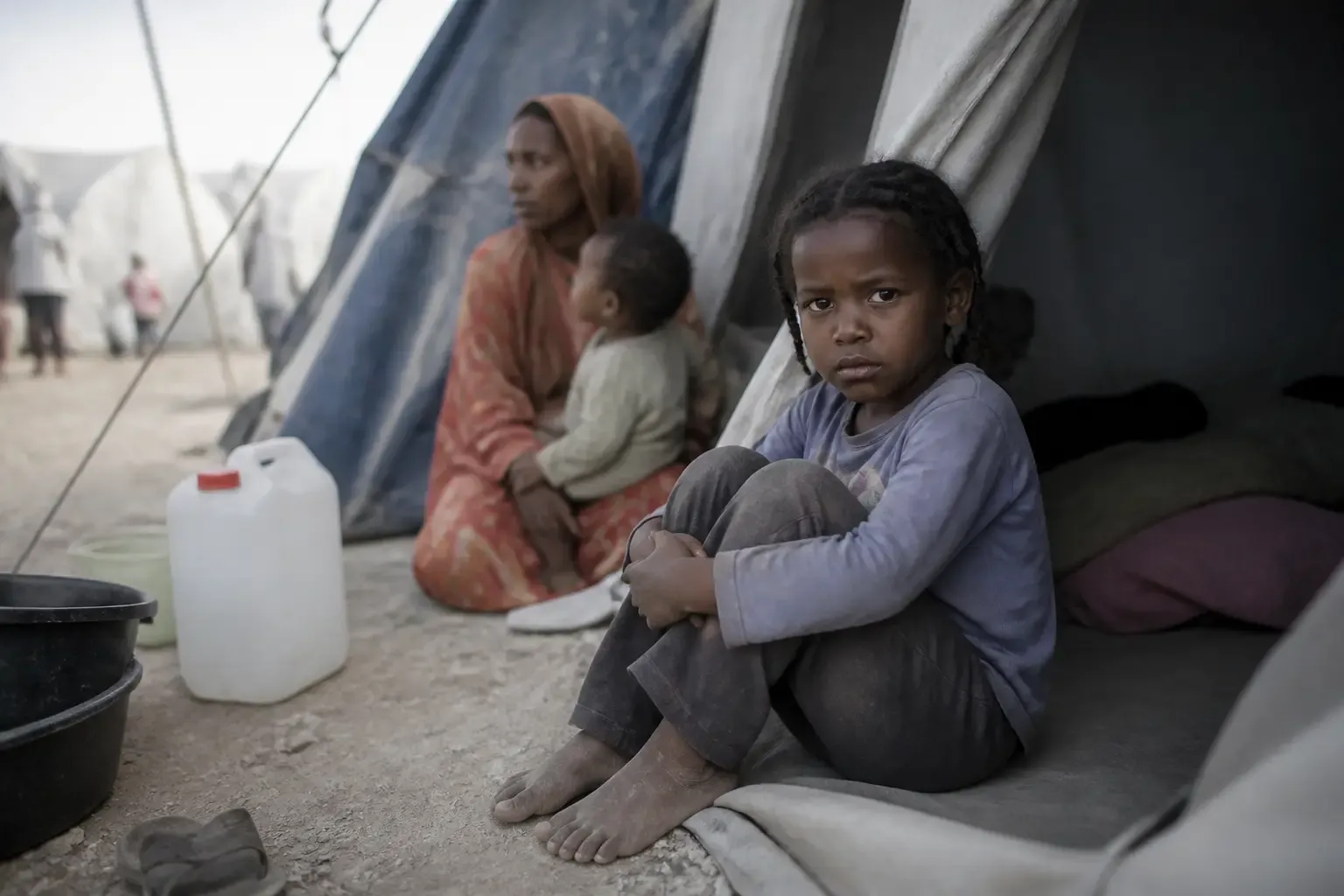
An estimated 400,000 Sudanese child refugees in Egypt live in poverty, with many traumatised by war and out of school. Support workers report rising cases of self-harm and suicide among young refugees.
Three years of conflict in Sudan have left hundreds of thousands of Sudanese children in Egypt without access to education, mental healthcare, or residency papers. Many live in unsafe, marginalised neighbourhoods filled with rubbish, raw sewage, and the constant threat of drug dealers and gangs. Support workers report that between 50% and 70% of Sudanese child refugees remain out of school, with cuts to humanitarian funding leaving many unattended while their parents work long hours to cover basic living costs. The lack of structure and stability has led to a rise in trauma, fear, and despair among these children, many of whom have lost the will to learn and express feelings of hopelessness about their future.
Refugee children are increasingly vulnerable to violence, self-harm, and suicide, with some describing a desire to die in order to reunite with family members lost in the war. Deportation raids by Egyptian police and the risk of forced child labour further compound their suffering, exposing them to abuse, gangs, and drug use. Many children are forced to work in dangerous conditions, such as on farms and in factories, where they face physical and sexual abuse. Unsupervised while their parents work, these children are at greater risk of falling into cycles of violence and exploitation, with little access to the support they need to rebuild their lives.
Why it matters
The lack of safe housing and consistent access to education increases the risk of long-term psychological harm for refugee children.
This section reflects Dumpling editorial interpretation and is provided for context only.
What to watch
Watch whether Egyptian authorities continue conducting unannounced raids on refugee homes and businesses.
This section reflects Dumpling editorial interpretation and is provided for context only.