
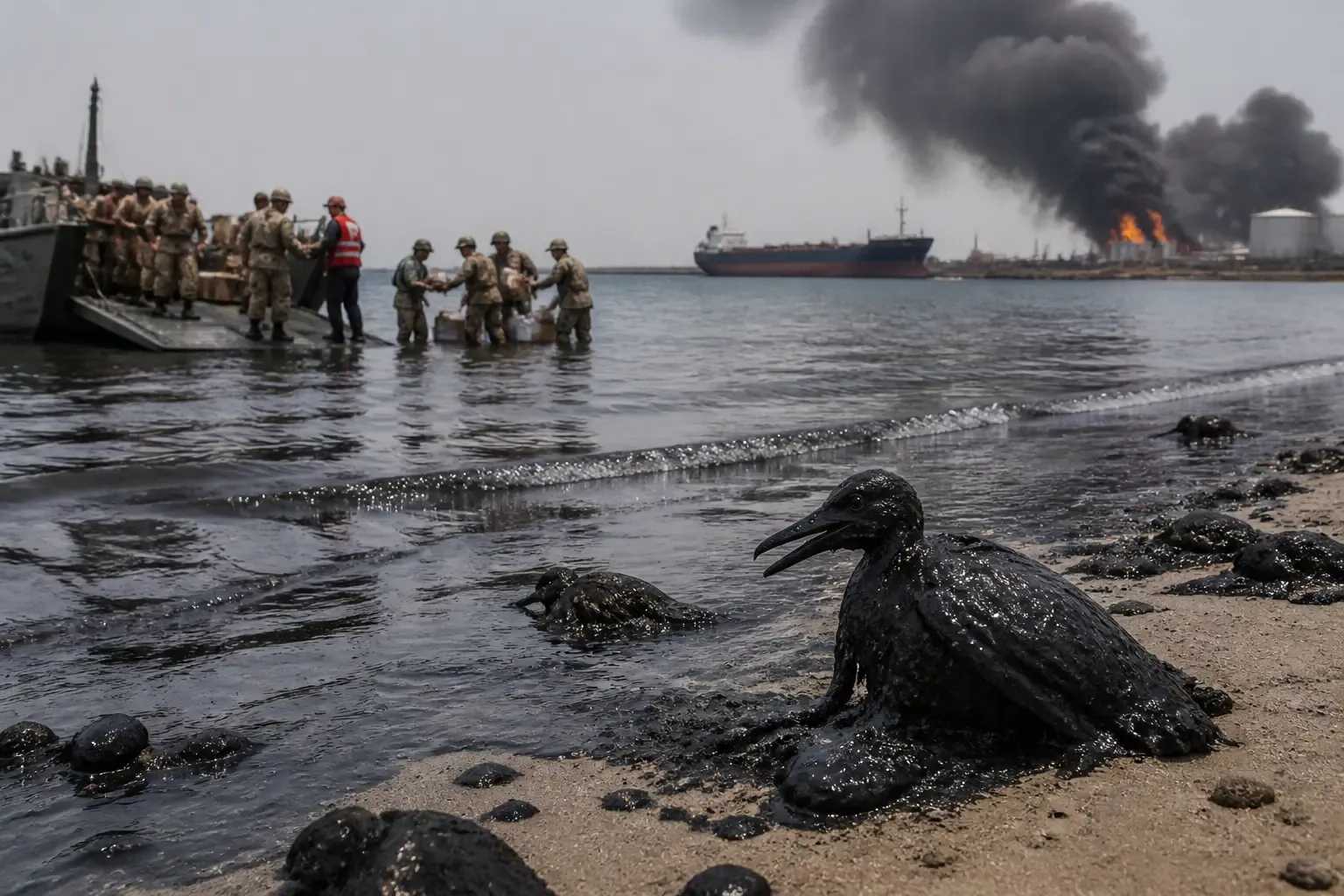
Since the US war on Iran began in February, hundreds of oil spills have occurred in the Gulf, with satellite images revealing extensive environmental damage. The strait of Hormuz has become a battlefield and the centre of a growing environmental disaster.
Oil tankers have been repeatedly struck by missiles and sea mines in the strait of Hormuz, leading to widespread oil spills that threaten marine life and coastal ecosystems. The pollution has spread across the Gulf, endangering species such as dolphins, sea turtles, and fish. Greenpeace has identified over 500 oil spills through satellite monitoring since the conflict began, with cumulative coverage reaching nearly 20,000 square kilometers.
Environmental experts warn that the shallow waters of the Gulf, combined with the lack of deep, cold water to buffer heat, could lead to long-term damage to coral reefs, mangrove forests, and seagrass meadows. October was the worst month, with more than 30 confirmed or reported attacks in the strait of Hormuz and surrounding waters, according to the Washington Institute for Near East Policy.
Why it matters
The Gulf's fragile marine ecosystems, already under pressure from climate change and human activity, face a significant threat from ongoing oil spills linked to the conflict.
This section reflects Dumpling editorial interpretation and is provided for context only.
What to watch
The continuation of attacks on oil tankers and the environmental impact of spills in the strait of Hormuz and surrounding waters.
This section reflects Dumpling editorial interpretation and is provided for context only.