
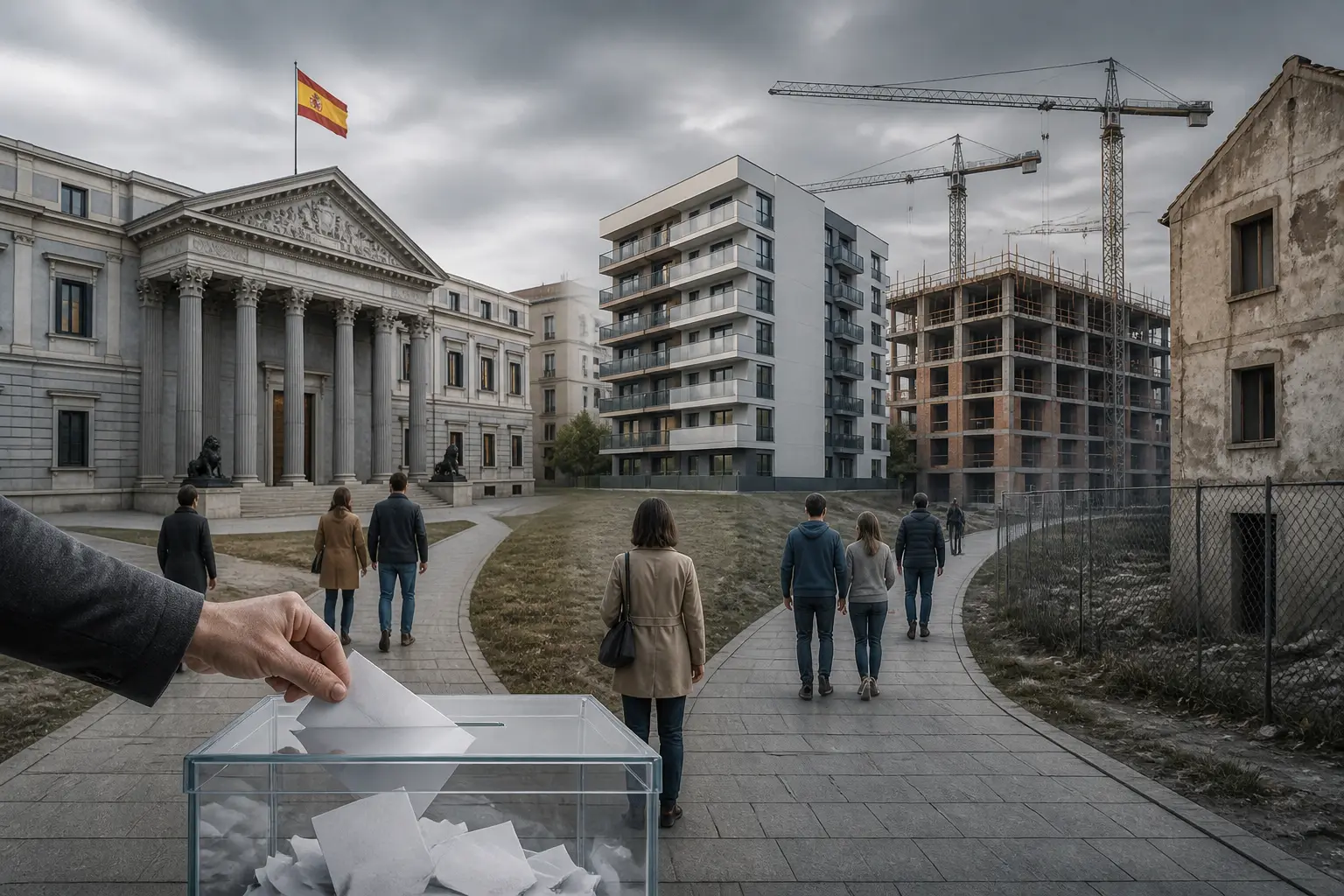
Spain's prime minister announced an early general election after housing reforms failed in parliament, with the ruling party trailing the conservative People's Party in polls.
Prime Minister Pedro Sánchez confirmed Spain will hold an early general election on 29 November following the failure of his party's housing reforms in the Spanish Congress. The Socialist party, which currently leads a minority government, faces a challenging re-election bid as opinion polls indicate it is trailing the conservative People's Party.
Sánchez warned of an 'extreme-right wave' in other countries and emphasized Spain's commitment to maintaining its global reputation for 'peace, feminism and prosperity'. The People's Party is expected to attempt forming a government with the far-right Vox party. The failed housing reforms marked a significant setback for the Socialist party, which had sought to address the ongoing housing crisis through legislative action. With the election date set, political focus will shift to the upcoming campaign, where the Socialist party must counter the growing influence of the People's Party and its potential alliance with Vox. The outcome of the election will have significant implications for Spain's future policies and governance.
Why it matters
The legislative defeat limits Sanchez's ability to address the housing crisis before the election.
This section reflects Dumpling editorial interpretation and is provided for context only.
What to watch
Watch whether Sanchez's warnings about the extreme-right wave are referenced in campaign speeches.
This section reflects Dumpling editorial interpretation and is provided for context only.