
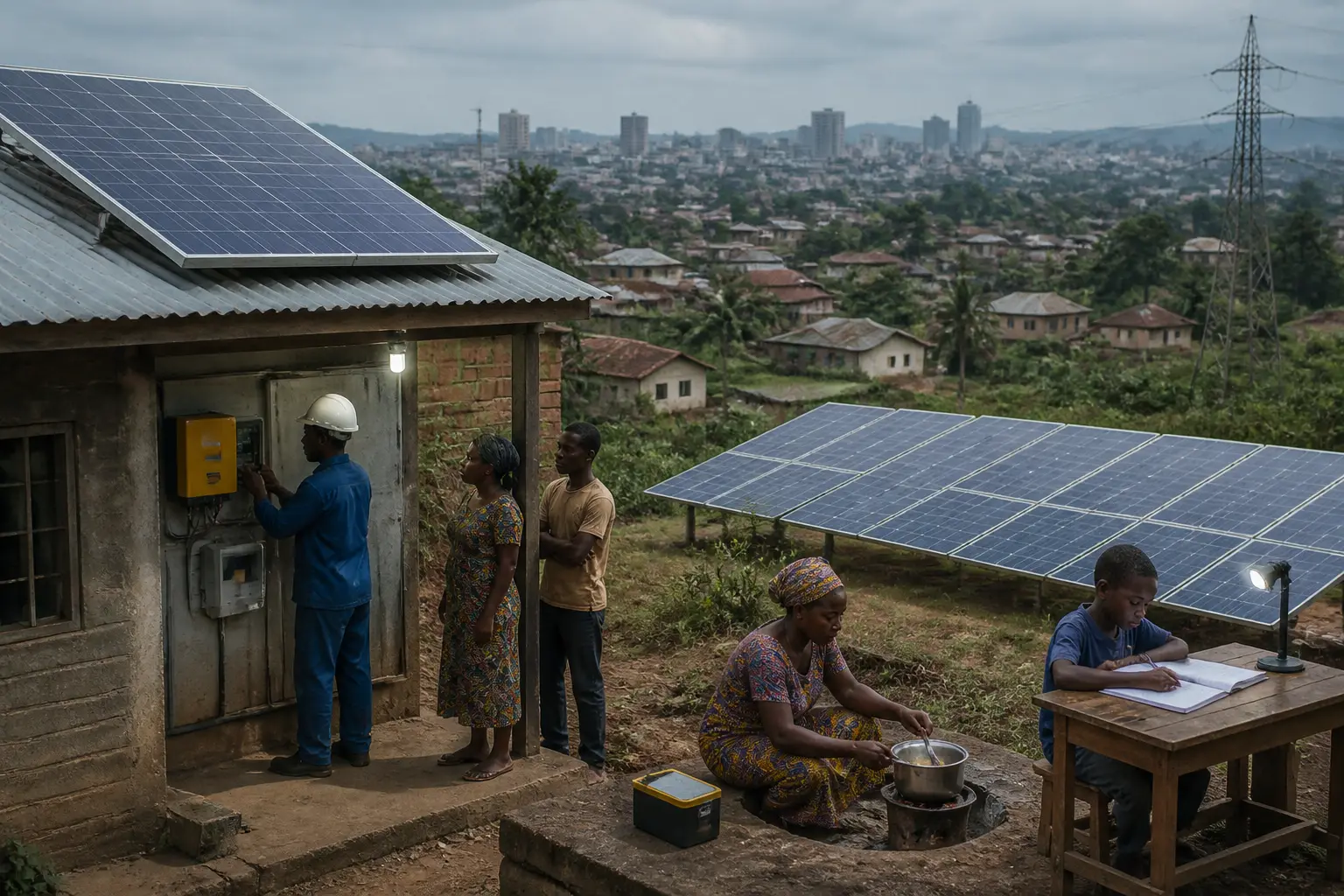
Renewable energy is becoming a faster and more affordable option for electricity in many lower- and middle-income countries, shifting away from fossil fuels used historically by wealthier nations.
Renewable electricity is now cheaper than fossil fuel-based power in many regions, allowing emerging economies to bypass traditional energy infrastructure and adopt solar and wind power more quickly. Unlike industrialized nations that relied on coal and gas for development, countries in Southeast Asia and Sub-Saharan Africa are prioritizing renewable sources for electricity generation.
Data shows that in 2023, only about a quarter of global electricity came from renewables, but the share is growing rapidly. Almost all new electricity capacity added globally is now based on solar or wind power. In India and Vietnam, solar energy alone accounted for at least six and ten percent of electricity generation, respectively, outpacing the global average of five percent.
Why it matters
Lower-income countries are avoiding fossil fuel dependency by adopting renewable energy, reducing their exposure to climate risks and legacy infrastructure challenges.
This section reflects Dumpling editorial interpretation and is provided for context only.
What to watch
Vietnam and India are leading the shift to solar energy, with their electricity consumption growing faster than in wealthier nations.
This section reflects Dumpling editorial interpretation and is provided for context only.