
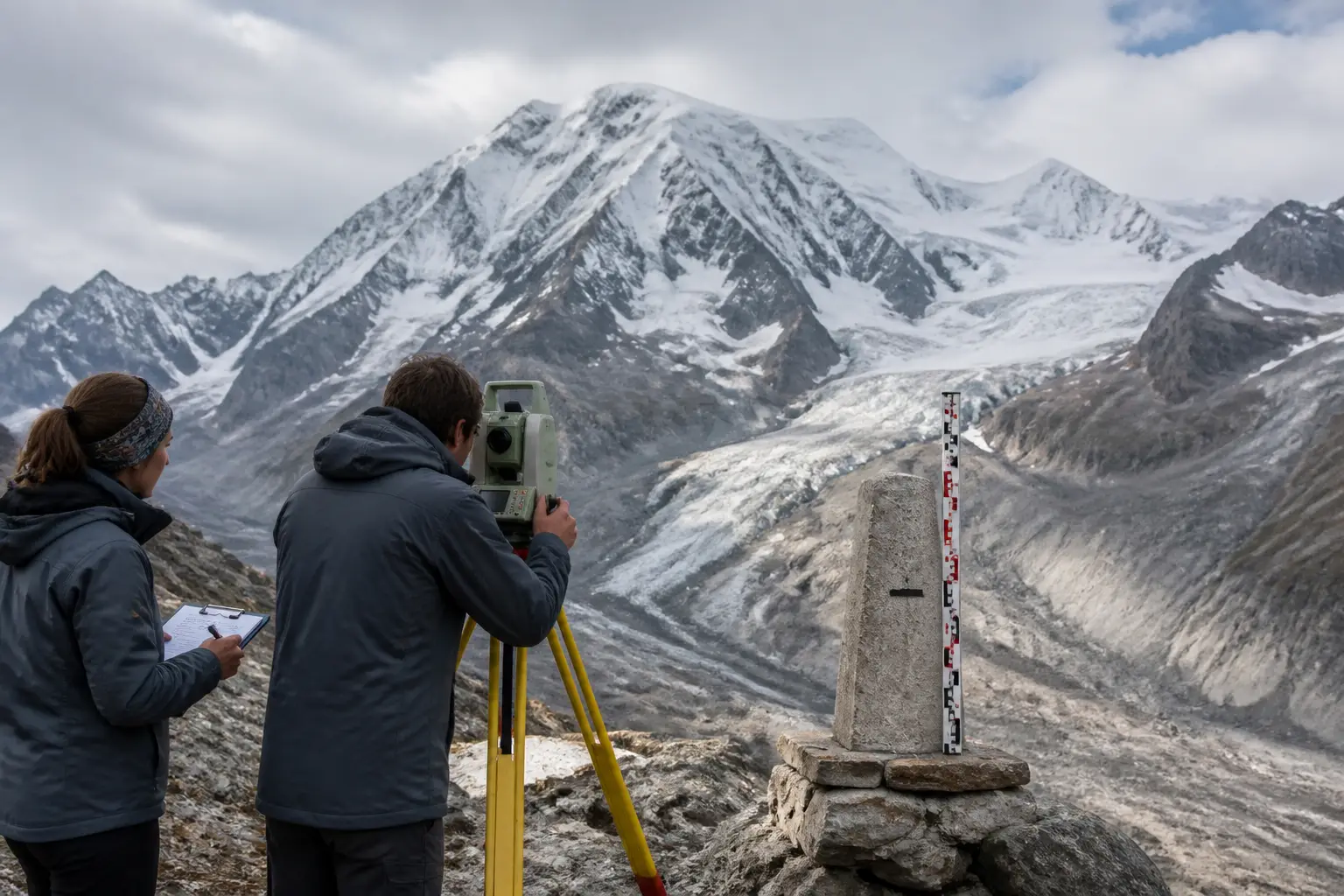
Mont Blanc, Europe's highest mountain, has lost more than a metre in height since 2025, according to surveyors, due to shifting snow and ice levels influenced by climate changes.
Surveyors from the Union Nationale des Géomètres-Experts (UNGE) and the Ordre des Géomètres-Experts measured Mont Blanc's peak at 4,807.47 metres above sea level, a drop of 1.29 metres from 2025. The summit's height fluctuates annually due to variations in snow and ice thickness caused by heat, wind, and precipitation. These changes are monitored regularly using satellite technology and drones to create detailed models of the mountain's surface.
The height recorded in 2026 was 1.88 metres higher than in 2023, when it reached its lowest level in recent years. However, the summit has decreased by 3.43 metres since its peak in 2007. Experts caution against directly linking annual height changes to long-term ice loss from fossil fuel pollution. They emphasize that fluctuations in summit altitude do not necessarily reflect changes in total ice mass or volume. The data highlights the complex relationship between surface elevation and ice dynamics in the region.
Why it matters
The fluctuation in Mont Blanc's height highlights the impact of climate changes on Alpine glaciers and snow cover, affecting local ecosystems and tourism.
This section reflects Dumpling editorial interpretation and is provided for context only.
What to watch
Future measurements of Mont Blanc's height and ongoing assessments of Alpine glacier retreat will provide further insights into climate trends.
This section reflects Dumpling editorial interpretation and is provided for context only.