
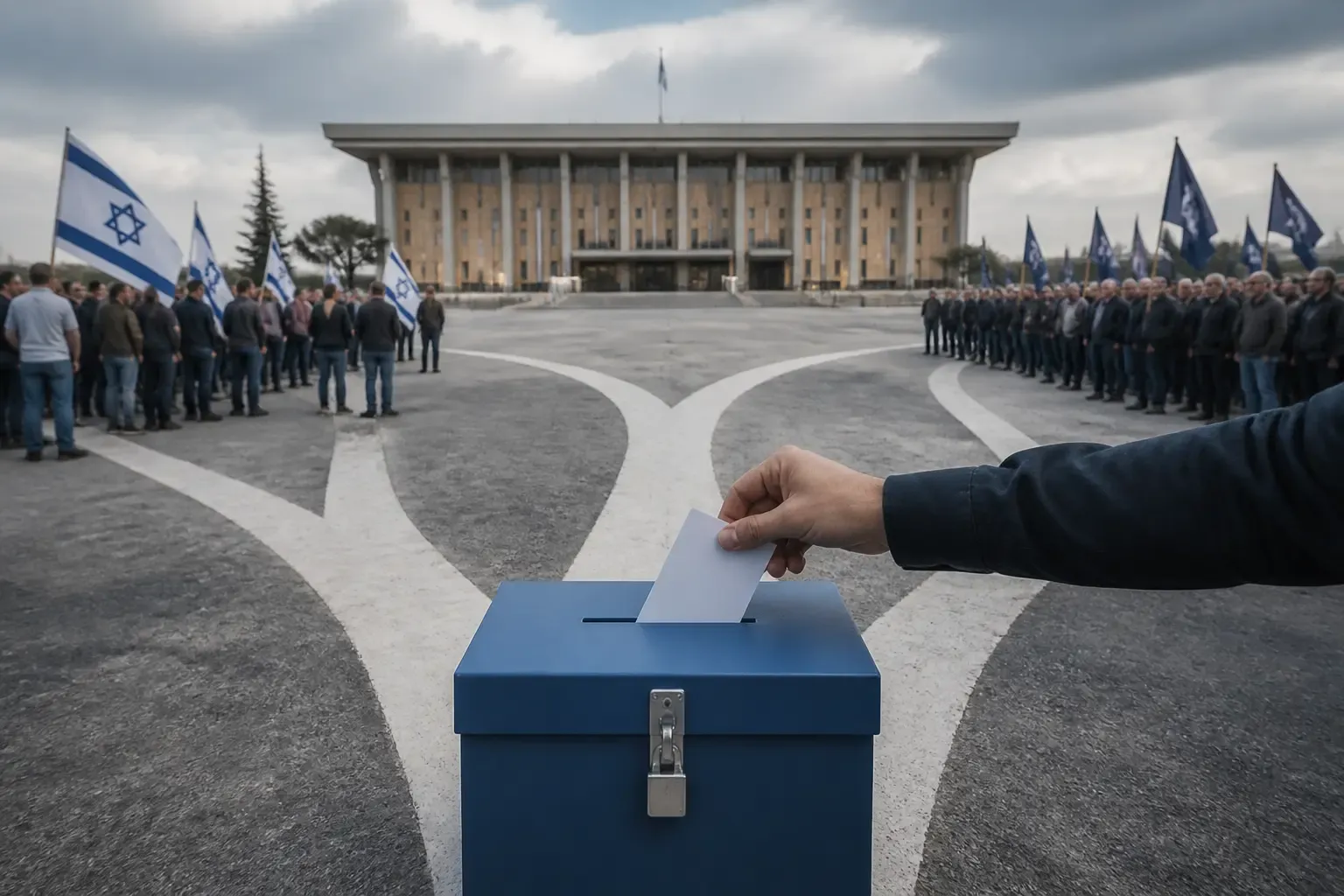
With 85% of votes counted, Israel faces a political deadlock as neither Netanyahu nor Eisenkot's bloc has enough seats to form a government, raising the possibility of new elections.
With 85% of votes counted, Israel appears to be in political deadlock, as neither Prime Minister Benjamin Netanyahu's coalition nor Gadi Eisenkot's bloc has secured enough seats to form a government. This has increased the likelihood of new elections being called, as neither side is projected to achieve a majority. The situation has left the country without a clear path to a stable government, with both sides needing to reconsider their positions or risk prolonged uncertainty.
Gadi Eisenkot has refused to join Netanyahu in a unity government, maintaining his stance as the sole alternative to Netanyahu's leadership. Netanyahu, meanwhile, has expressed support for maintaining alliances with far-right and ultra-Orthodox parties, complicating efforts to form a coalition. This has made a national unity government less likely, as both leaders have shown little willingness to compromise on key issues. The election has also seen a significant increase in Arab voter turnout, with Arab parties potentially gaining a record number of seats, further complicating the political landscape and the possibility of forming a governing coalition.
Why it matters
The impasse may force a new round of elections as no party gains enough support to form a government.
This section reflects Dumpling editorial interpretation and is provided for context only.
What to watch
Watch whether the incumbent Prime Minister Benjamin Netanyahu's coalition or Gadi Eisenkot's bloc secures enough support to form a government.
This section reflects Dumpling editorial interpretation and is provided for context only.