
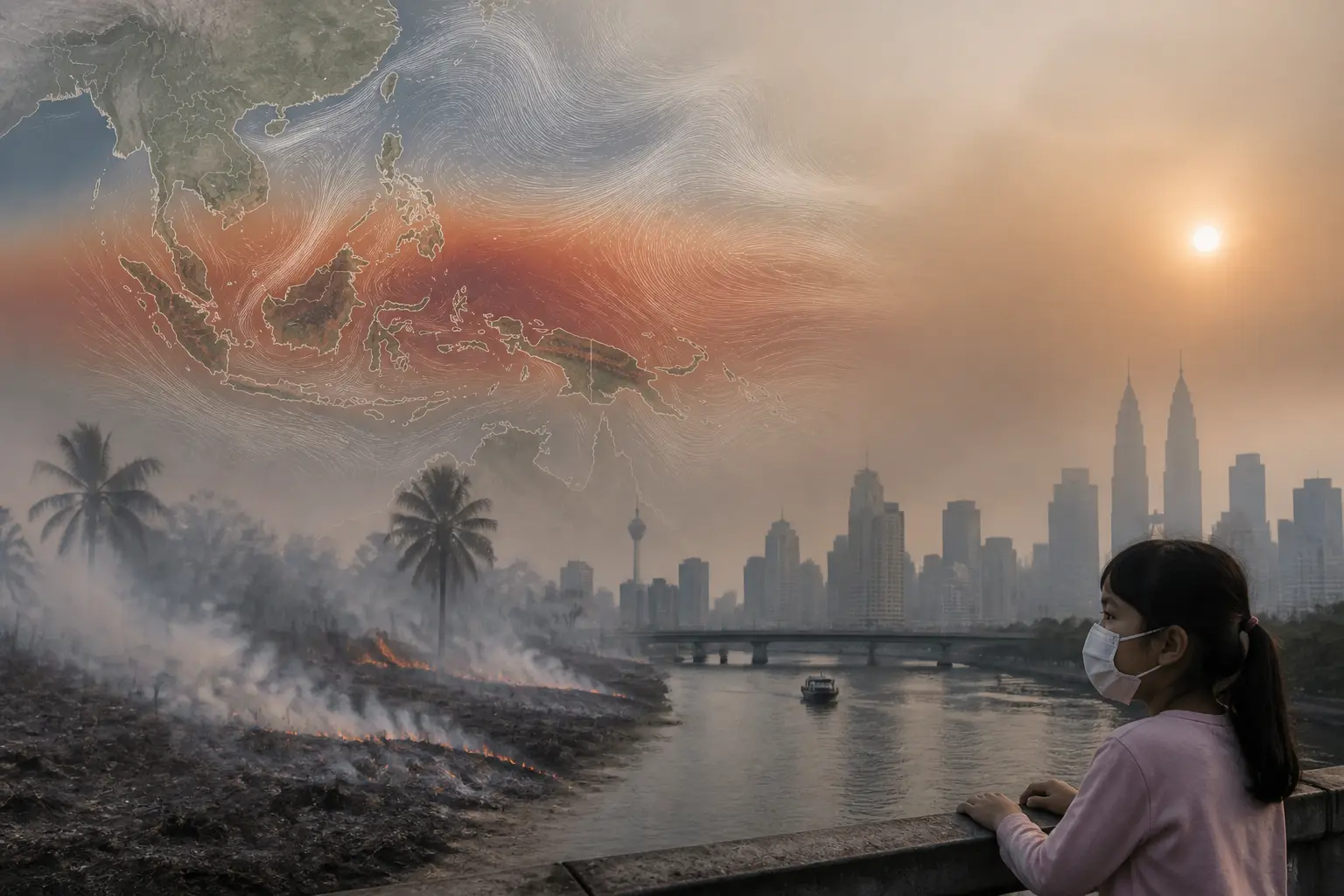
A noxious haze from worsening wildfires in Indonesia is spreading across Southeast Asia, exposing millions to dangerous pollution levels and causing respiratory issues in thousands of children.
Wildfires in Indonesia, fueled by a 'super' El Niño, have led to a toxic haze that is affecting Indonesia, Malaysia, Singapore, and the Philippines. The smog has reached levels more than 15 times the World Health Organization's recommended limit in some areas, with over 50,000 respiratory infections reported in Indonesia between July and August.
Children under five have been particularly affected, with more than 12,000 cases of respiratory issues linked to the haze. Residents in affected areas describe severe symptoms, including coughing, sore throats, and itchy eyes, with some reporting worsening conditions compared to previous years. The fires are linked to long-term land-use changes and industrial activities, including peatland drainage and large-scale plantations.
Why it matters
The worsening haze directly impacts public health, particularly among children and vulnerable populations in Indonesia and neighboring countries.
This section reflects Dumpling editorial interpretation and is provided for context only.
What to watch
The continuation of the 'super' El Niño and its impact on fire frequency and air quality in Southeast Asia over the coming months.
This section reflects Dumpling editorial interpretation and is provided for context only.