
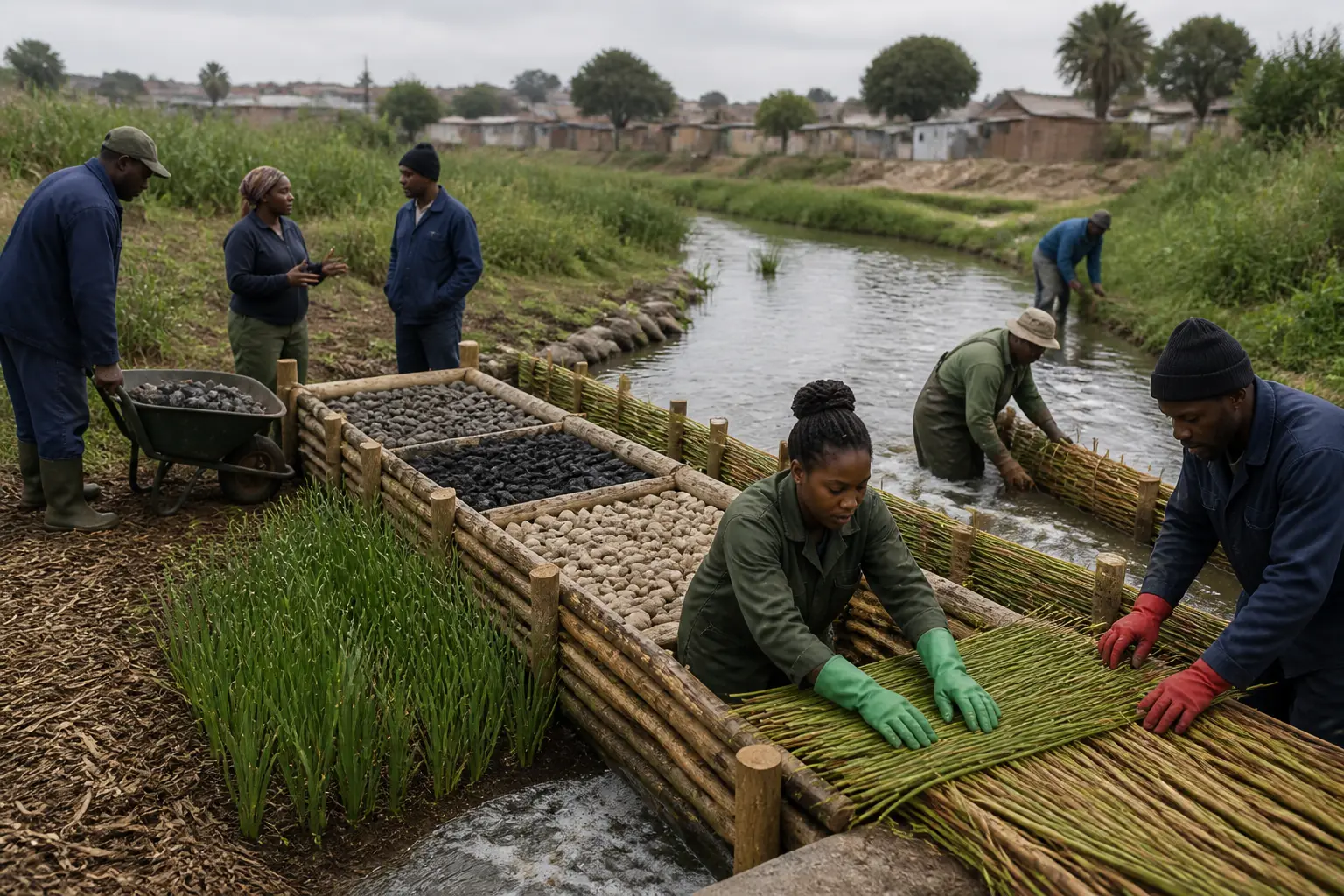
A South African town has successfully treated polluted river water using stones, heat-treated wood, and sand, enabling irrigation for local food production without chemical use.
Researchers from the University of Cape Town have developed a system to clean 36,000 litres of contaminated water daily from the Stiebeuel River. The water, polluted by sewage, chemicals, and pharmaceuticals, is filtered through stones, biochar, and sand using renewable energy. The treated water is now suitable for irrigation in an informal settlement near Stellenbosch.
The project, established in 2018, has reduced bacteria and pathogens to safe levels for irrigation, though not for drinking. The system removes about 99% of toxins before releasing most of the water back into the river. Approximately 3,000 litres are used daily to irrigate food gardens at the Water Hub, supporting local food security in a growing informal settlement.
Why it matters
The method avoids chemical use and provides a sustainable way to irrigate food plots in an informal settlement.
This section reflects Dumpling editorial interpretation and is provided for context only.
What to watch
Watch whether the University of Cape Town scales the system for other polluted rivers in South Africa.
This section reflects Dumpling editorial interpretation and is provided for context only.