
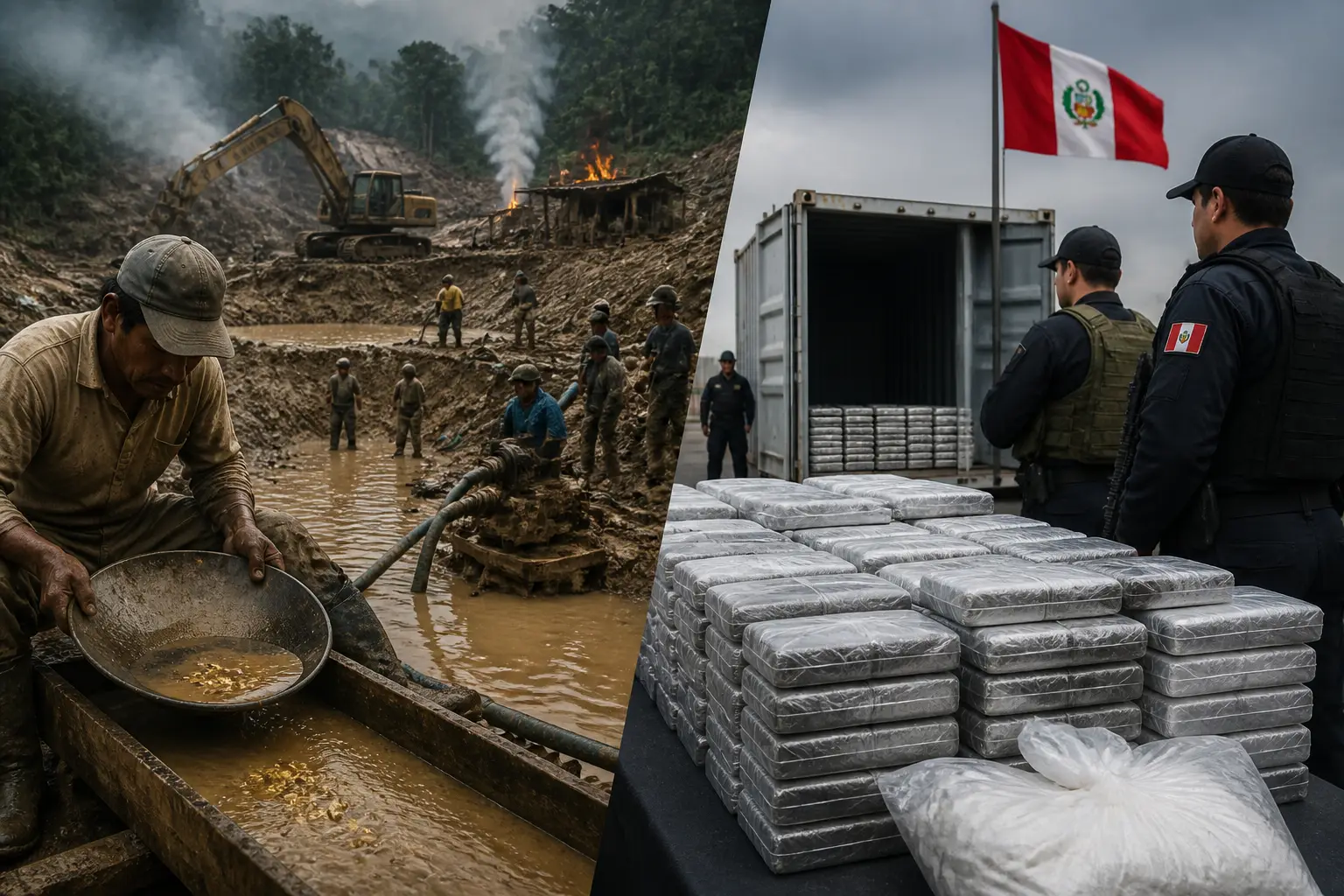
Rising gold prices have driven illegal mining in Peru's Tambopata National Reserve, causing extensive environmental damage and outpacing cocaine trafficking as the country's most lucrative illicit industry.
Illegal gold mining has caused the destruction of over 500 hectares of rainforest in Tambopata National Reserve in the past year, according to satellite data. More than 140,000 hectares in Madre de Dios region have been lost to mining, representing 97.5% of all mining-related deforestation in Peru’s Amazon rainforest.
Gold prices have surged, making illegal mining more profitable than drug trafficking, which Peru is the second-largest producer of after Colombia. Military operations have intensified, with aerial surveillance and 24/7 patrols aimed at curbing the activity. However, enforcement challenges persist due to corruption and the legal status of gold as a traded commodity.
Why it matters
Illegal gold mining threatens Peru’s environment and outcompetes drug trafficking as the country’s most profitable illicit industry, impacting local communities and ecosystems.
This section reflects Dumpling editorial interpretation and is provided for context only.
What to watch
The effectiveness of military and environmental enforcement efforts in reducing illegal mining activities in Madre de Dios region.
This section reflects Dumpling editorial interpretation and is provided for context only.