
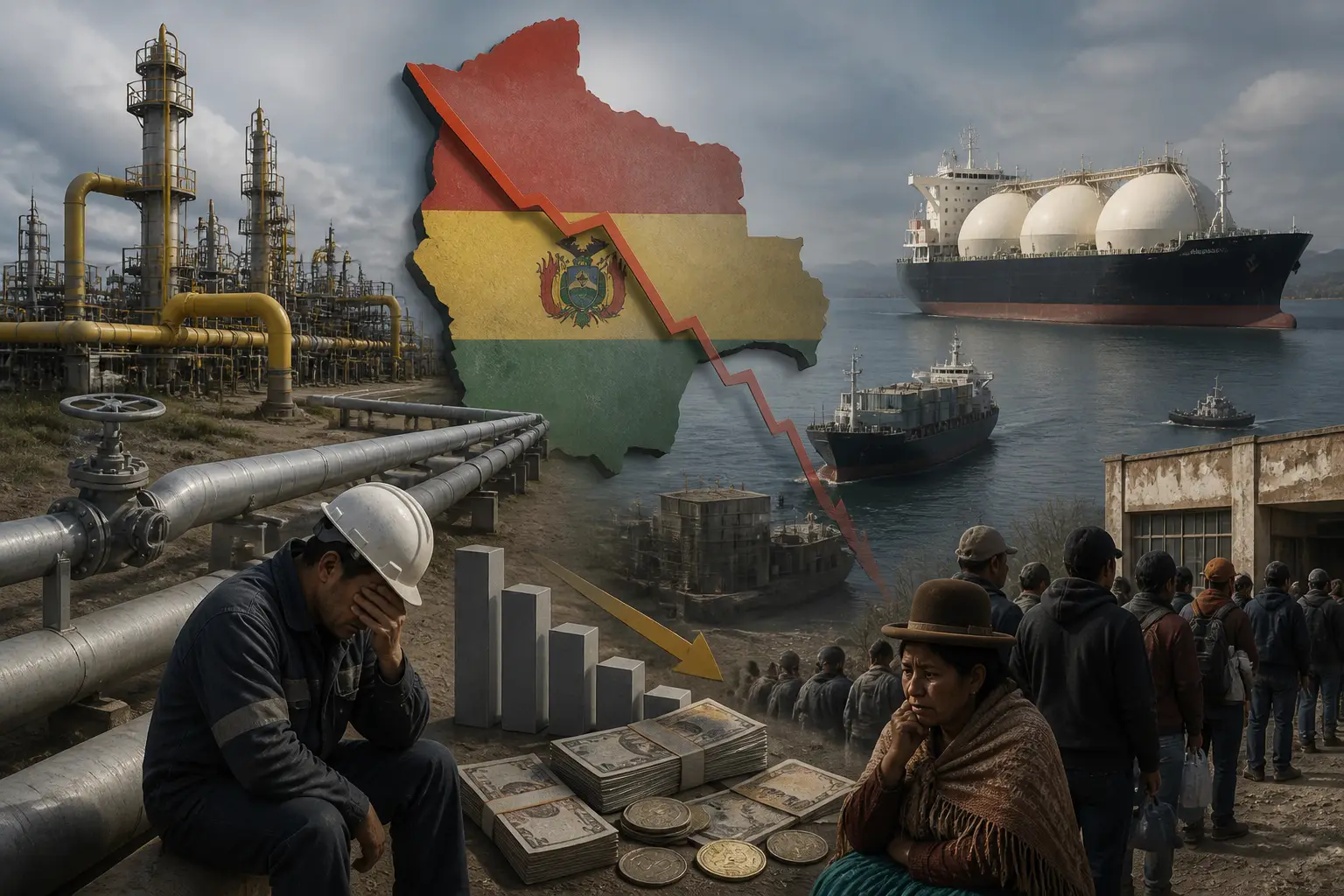
Bolivia's reliance on fossil gas has led to economic instability, with rising inflation and poverty as gas reserves decline and alternative strategies face resistance.
Bolivia's economy, once driven by a fossil gas boom from 2006 to 2014, now faces instability as reserves decline and inflation rises. During the boom, the country expanded social programs and halved poverty rates, but the collapse of gas prices and dwindling reserves have reversed much of that progress. The economic miracle, which saw the construction of a presidential skyscraper and the world’s longest urban cable car network in La Paz, was fueled by high global fuel prices and state control of hydrocarbons. However, the failure to invest in industrialization or develop value-added exports left the economy overly dependent on gas revenues.
Experts attribute the current crisis to a lack of diversification and reliance on extractive industries. Despite the potential for sustainable alternatives, powerful lobbies have hindered efforts to develop a more diversified economy. The failure to invest in core economic pillars such as steel, agriculture, education, and healthcare has left Bolivia vulnerable to economic shocks. Additionally, costly subsidies, capital flight, and a fixed currency exchange rate pegged to the US dollar exacerbated the situation. After the 2014 commodity crash, foreign reserves dwindled, and the government sustained subsidies and the peg, printing money to cover deficits. These policies fostered import reliance and weakened local industries, contributing to the current economic challenges.
Why it matters
Bolivia's economic model, dependent on fossil gas, has left it vulnerable to resource depletion and inflation, affecting millions of citizens.
This section reflects Dumpling editorial interpretation and is provided for context only.
What to watch
Bolivia's government and private sector may take steps to diversify the economy and address inflationary pressures.
This section reflects Dumpling editorial interpretation and is provided for context only.