
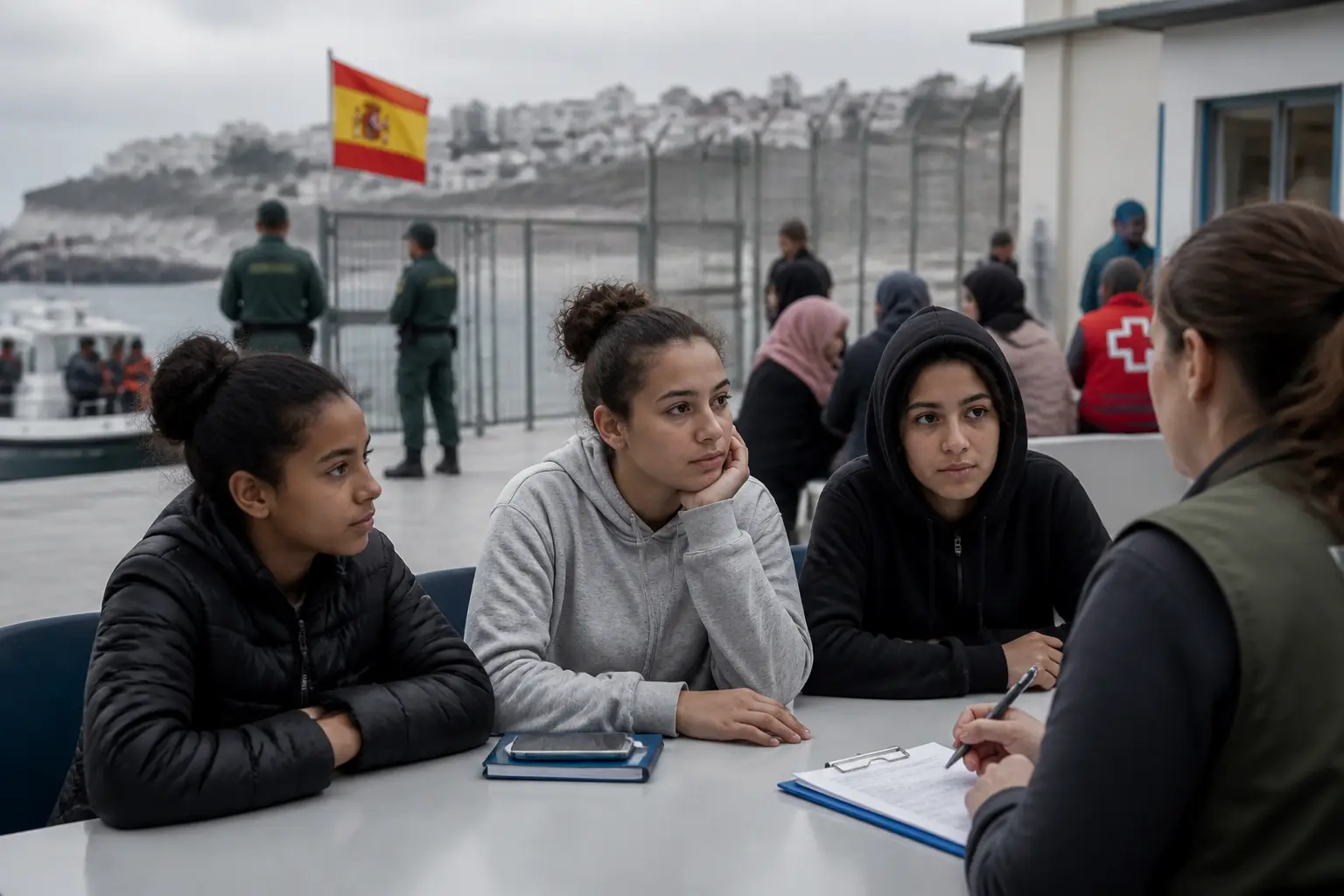
More than two dozen teenage girls stranded in Ceuta, Spain, shared their reasons for crossing from Morocco, citing education, financial independence and personal autonomy as key motivations.
More than two dozen teenage girls who crossed from Morocco into Spain in late July shared their motivations for making the journey. Many described feeling trapped by domestic responsibilities and limited educational opportunities in Morocco. For example, Fatin, now living in a makeshift camp in Ceuta, said she had to give up school to take on household duties, which made her future feel distant. The girls, who wrote in Arabic, Darija, Spanish, French, and English, expressed a strong desire to finish their education, work, and have more control over their lives. Some aspired to become nurses, psychologists, chefs, or footballers, while others hoped to support their families financially or escape unwanted marriage arrangements.
The girls are now living in an improvised settlement in El Príncipe, one of Ceuta’s most deprived neighborhoods, uncertain about their legal status and whether they will be allowed to stay in Spain. Local authorities have recorded 13 formal complaints of sexual assault since the mass crossing began, with three minors among the victims. Despite efforts by local residents to create a safe environment, the girls continue to face challenges such as access to basic needs like shelter, healthcare, and education. Their immediate concerns remain focused on safety, privacy, and clarity about their future in Spain.
Why it matters
Uncertainty over their legal status in Spain complicates their ability to access education and basic services.
This section reflects Dumpling editorial interpretation and is provided for context only.
What to watch
Watch whether Moroccan teenage girls in Ceuta will be granted legal status or returned to their home country.
This section reflects Dumpling editorial interpretation and is provided for context only.