
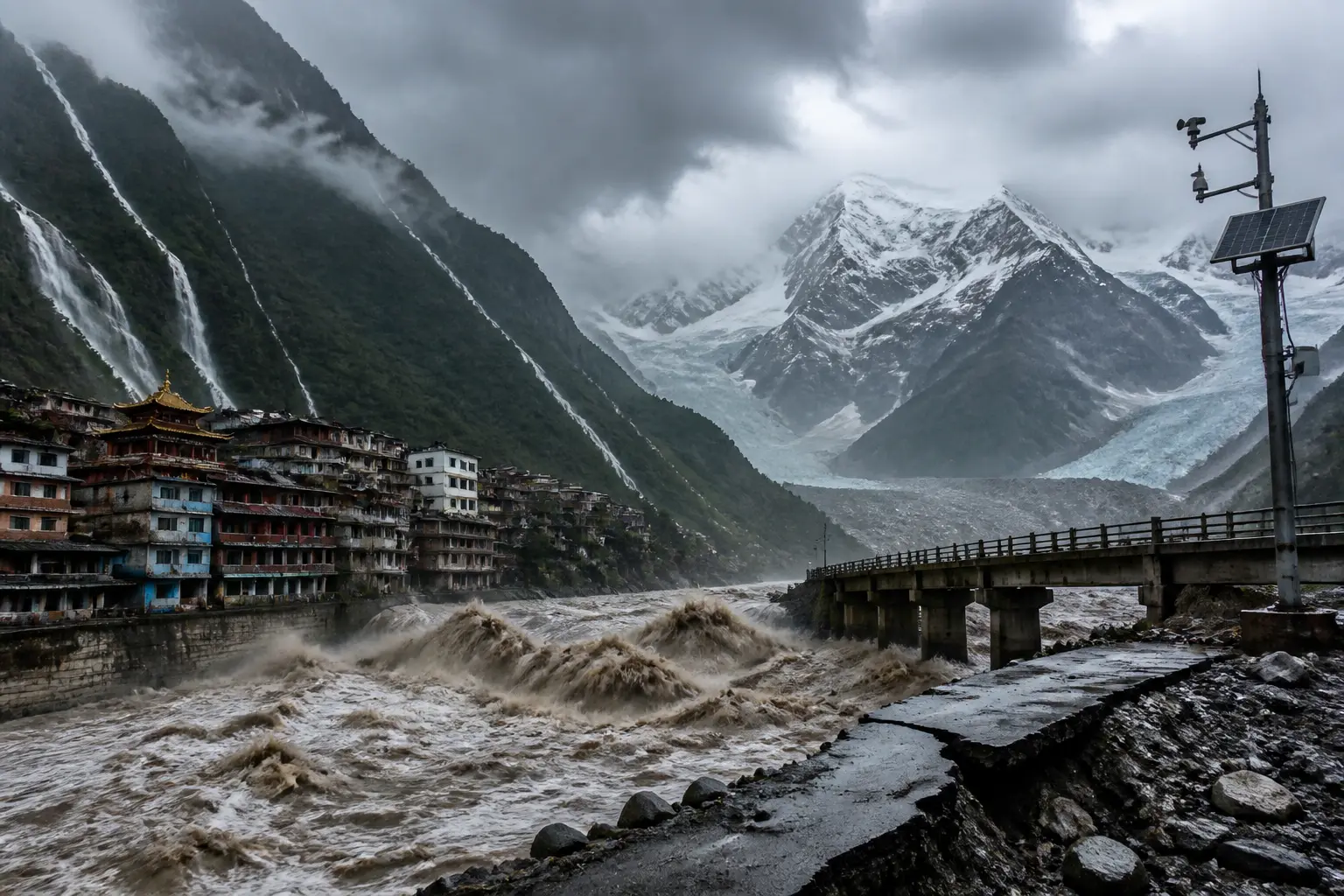
A catastrophic flash flood in Nepal and Tibet, triggered by a glacial collapse, has killed hundreds and exposed the growing risks of climate change in mountainous regions.
The flood, which occurred on 26 August, involved a surge of ice, water, rock, and mud that destroyed infrastructure and communities along the Lhende Khola, Bhotekoshi, and Trishuli rivers. Early warning systems failed to detect the sudden, debris-laden flood, which overwhelmed monitoring equipment before alerts could be issued. The system was designed to detect a more gradual rise in water levels, but this flood arrived as a massive surge, destroying the very instruments meant to detect it. This highlights a critical gap between existing early warning systems and the new, more extreme hazards brought about by climate change.
Preliminary assessments suggest a glacial collapse caused an ice-rock avalanche, temporarily blocking the river before a massive surge traveled downstream. The event underscores the need for improved early warning systems, cross-border cooperation, and international support for adaptation efforts in vulnerable regions. As the climate continues to change, hazards are becoming more unpredictable and severe, requiring more robust monitoring, preparedness, and investment in resilient infrastructure. The flood serves as a stark reminder of the urgent need for global climate action to prevent future disasters of this scale.
Why it matters
Nepal and Tibet face heightened risks from climate change, with limited resources to address escalating hazards that cross national borders.
This section reflects Dumpling editorial interpretation and is provided for context only.
What to watch
International support for early warning systems and cross-border cooperation in the Himalayan region will be critical in the coming months.
This section reflects Dumpling editorial interpretation and is provided for context only.