
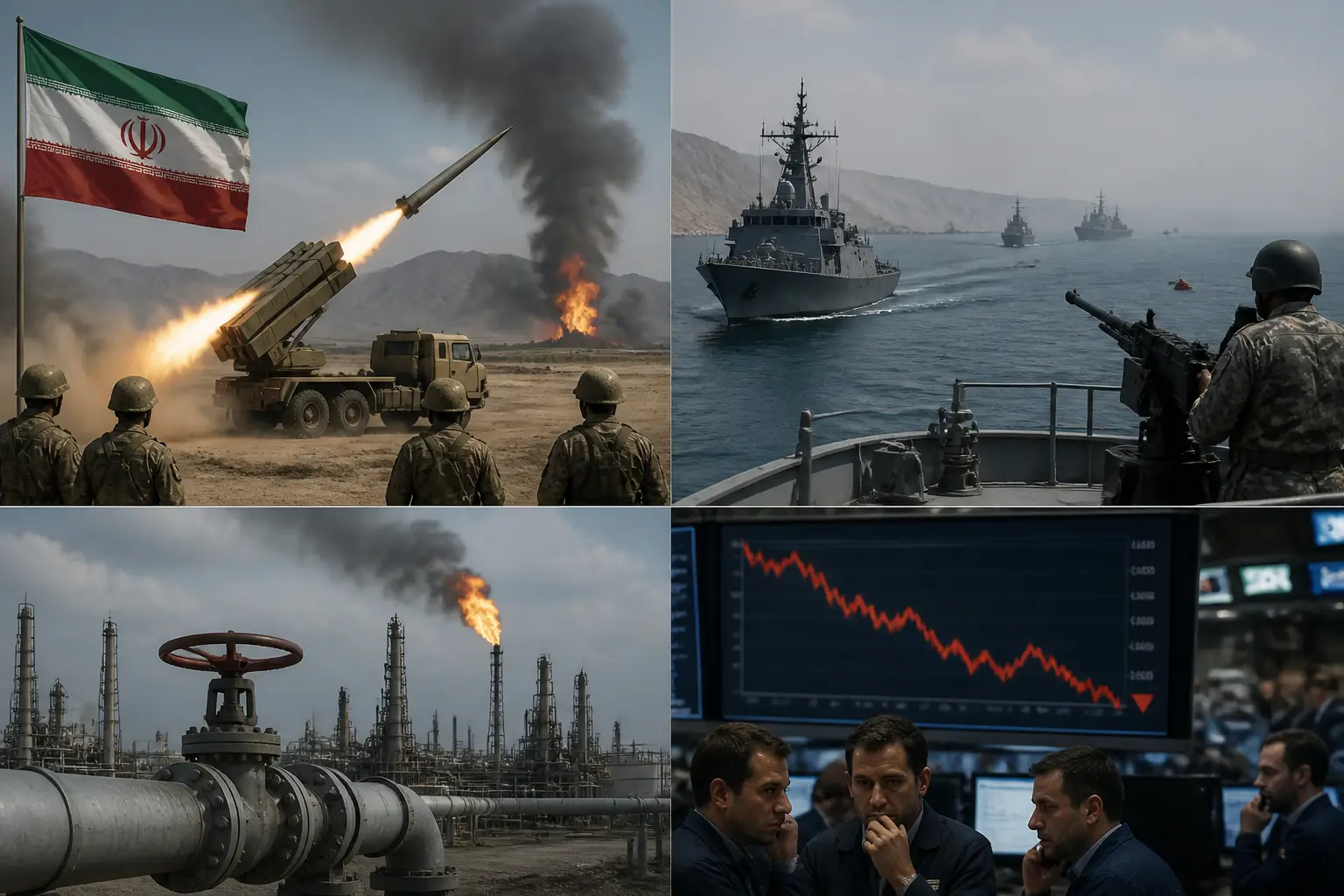
US and Israeli strikes on Iran began in February 2026, leading to regional conflict and closure of the Strait of Hormuz, a key oil shipping route.
On 28 February 2026, the US and Israel launched large-scale strikes on Iran, prompting Tehran to retaliate against Israeli and US allies across the Gulf. Iran’s supreme leader, Ali Khamenei, was killed on the first day of the strikes, and the Strait of Hormuz was effectively closed soon after. The conflict rapidly expanded into a regional war with global economic consequences.
The situation has since seen repeated cycles of fighting, ceasefires, and failed negotiations. Each diplomatic opening has been followed by renewed threats and attacks. The Strait of Hormuz remains central to the crisis, as it typically handles over 100 vessels daily, transporting about a quarter of the world’s seaborne oil trade. Disruptions in the strait have caused fluctuations in oil prices, with data sourced from LSEG and Lloyd’s List Intelligence. Analysis of social media and military actions underscores the ongoing volatility and lack of resolution in the region.
Why it matters
The closure of Hormuz directly impacts global oil trade, affecting economies reliant on stable energy supplies.
This section reflects Dumpling editorial interpretation and is provided for context only.
What to watch
Future movements of vessels through Hormuz and any new diplomatic agreements between regional powers.
This section reflects Dumpling editorial interpretation and is provided for context only.