
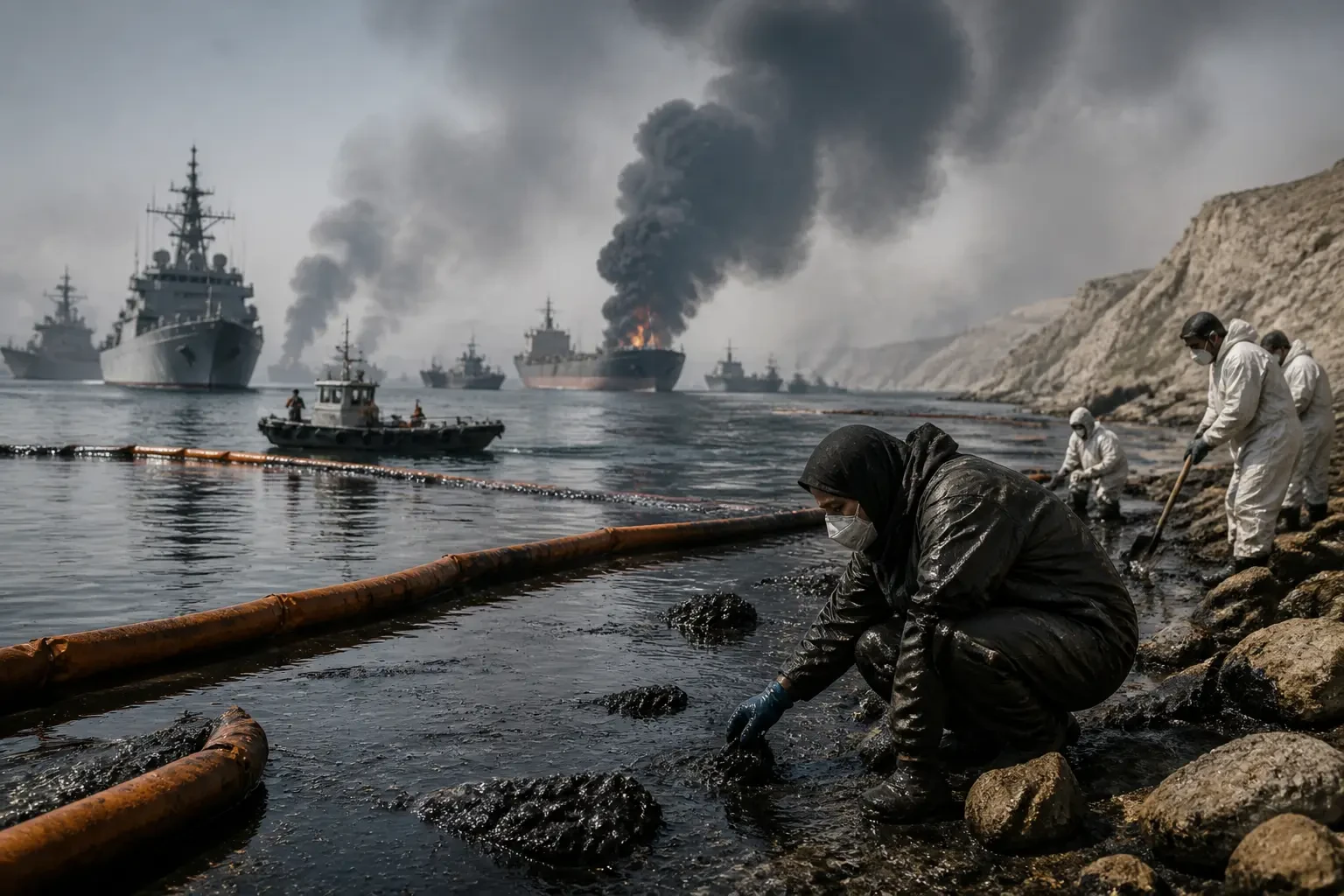
The conflict between the US, Israel, and Iran has transformed the Strait of Hormuz into a major environmental disaster zone, with oil leaks from damaged tankers threatening marine ecosystems.
The Strait of Hormuz, a critical oil shipping route, has become a battlefield and a site of significant environmental damage due to the ongoing war between the US, Israel, and Iran. Tankers struck by missiles or sea mines are leaking oil into the Gulf, creating vast slicks visible from space. These slicks are staining coastlines and threatening long-term harm to marine ecosystems, which are already under pressure from industrial activity and climate change.
Many of the affected areas remain inaccessible due to a naval blockade, making it extremely difficult to document the full extent of the environmental devastation on the ground. The Guardian has examined numerous satellite images and spoken to environmental experts to assess the scale of the damage. These efforts aim to provide a clearer understanding of how the conflict is exacerbating an already fragile ecological situation in the region.
Why it matters
The immediate consequence is that marine ecosystems face severe and visible damage from oil pollution.
This section reflects Dumpling editorial interpretation and is provided for context only.
What to watch
Watch whether naval forces will allow independent teams to assess the environmental impact in blocked areas.
This section reflects Dumpling editorial interpretation and is provided for context only.