
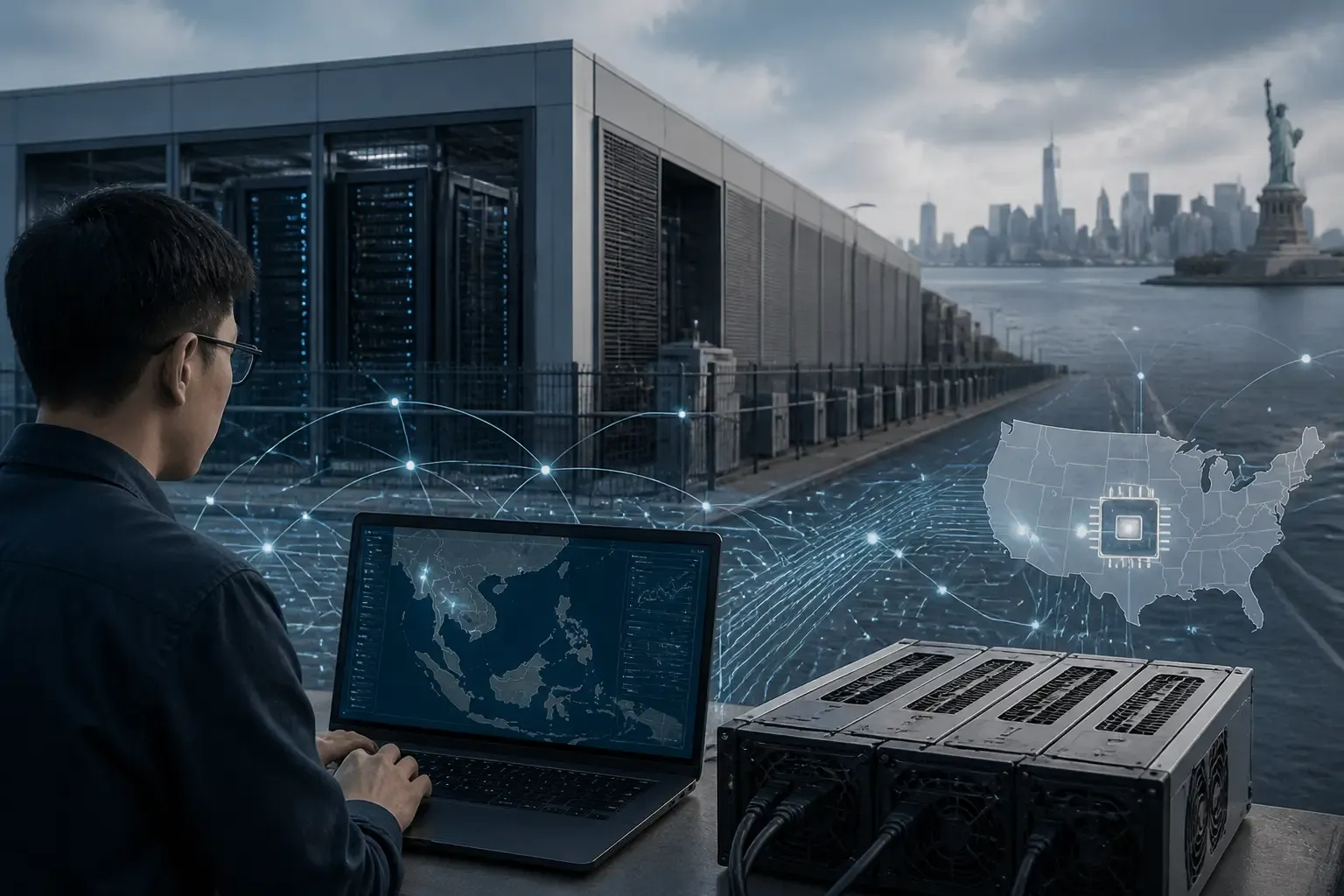
Chinese companies are renting computing capacity in Malaysia and other Southeast Asian hubs to access US-made AI chips restricted from direct export. A Washington think tank estimates that 24% of China's total computing power now relies on these overseas data centers.
Malaysia has attracted €510 billion in AI infrastructure investment since February 2025, with 16 of 27 new data centers located in the state of Johor. Major US technology firms, including Amazon, Oracle, Microsoft, and Google, have established significant operations along the Strait of Malacca. Alibaba Cloud operates six data centers in Malaysia, with the most recent facility opening on November 19. The Institute for Progress, a Washington-based think tank, warned in October that Southeast Asia is becoming an offshore hub for Chinese AI enclaves. The group estimated that three-quarters of China's remote access to overseas data centers is located in the region.
Chinese entities can rent GPUs as a service from cloud providers or lease data center capacity directly from developers. In early October, Tencent signed a five-year, $7 billion contract with Oracle for computing capacity equivalent to 100,000 modern AI chips. The deal collapsed weeks later, with media reports citing pressure from both Beijing and Washington. US officials reportedly raised security concerns with Oracle, while China seeks to develop its own chip industry. The Institute for Progress noted that these arrangements are difficult to size because cloud providers rarely disclose customer identities or specific capacity usage.
Why it matters
The scarcity of AI chips in China is forcing firms to seek alternative locations for chip manufacturing and processing.
This section reflects Dumpling editorial interpretation and is provided for context only.
What to watch
Watch whether the Malaysian government will meet its goal of creating jobs with a high local employment rate.
This section reflects Dumpling editorial interpretation and is provided for context only.