
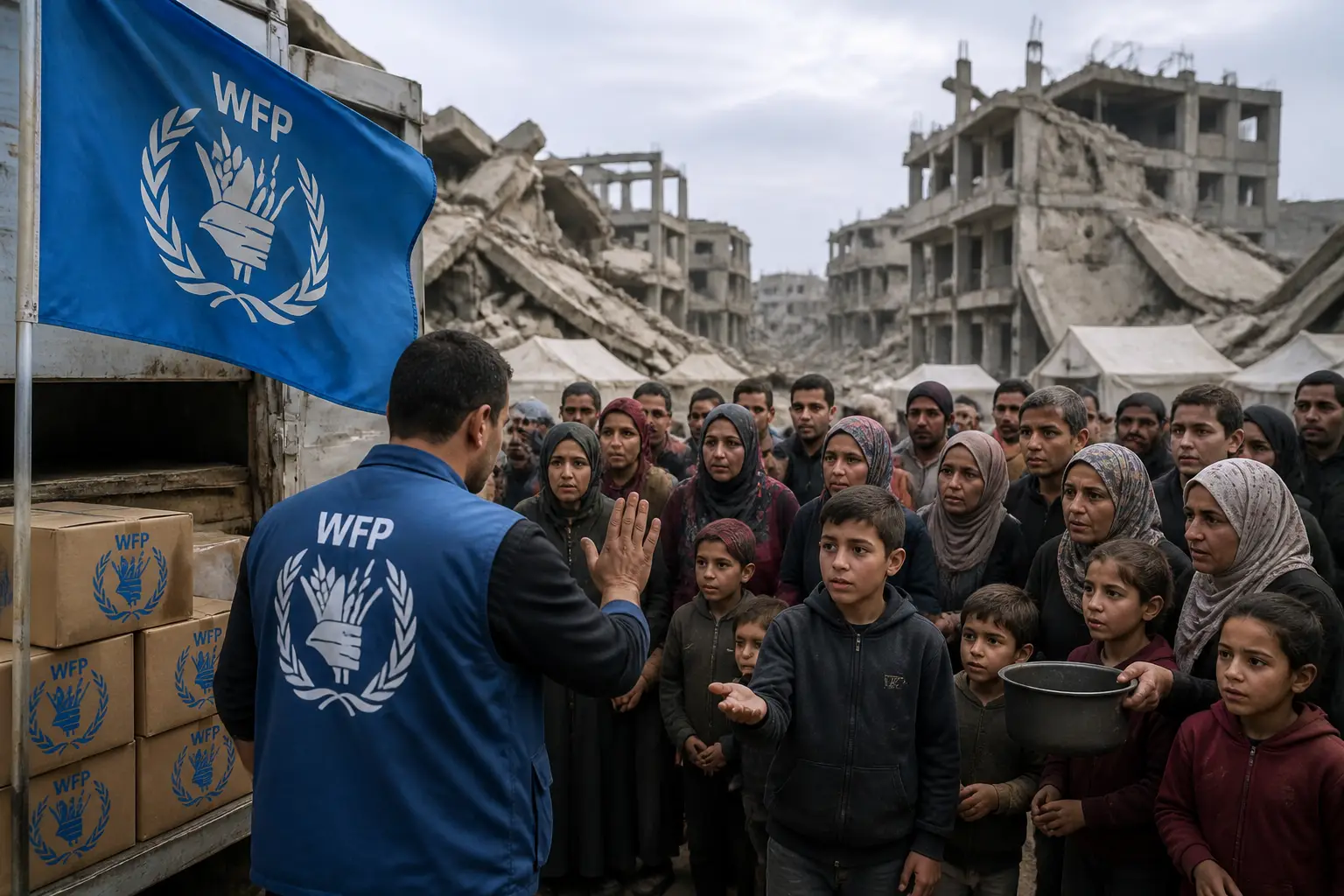
The UN’s World Food Programme has ended support for over half a million Palestinians in Gaza each month due to aid cuts, increasing food insecurity for two-thirds of the population.
Funding for the World Food Programme has fallen by more than half from 2025 levels, leading to a reduction in aid to 1.1 million people each month. This includes cuts to ration boxes, cash stipends, and hot meals at community kitchens. The WFP previously supported three-quarters of Gaza’s population, about 1.6 million people, but current levels of support have been scaled back significantly. These reductions have been implemented as a result of the funding shortfall, which has forced the agency to end support for more than half a million people each month.
The WFP requires over £300 million over the next six months to restore and maintain critical programmes in Palestine. Without economic reconstruction, most families in Gaza continue to rely on food handouts, with 200,000 people facing emergency levels of food insecurity. Two-thirds of the population in Gaza face crisis levels of food insecurity, and the situation is described as very fragile. The lack of employment opportunities, with about 80% of Gaza’s population unemployed, further exacerbates the reliance on aid. The WFP’s representative in Palestine has emphasized the need for investment in recovery to ensure long-term stability and reduce dependence on humanitarian assistance.
Why it matters
The reduction in aid threatens the stability of Gaza’s population, particularly vulnerable groups such as children and mothers.
This section reflects Dumpling editorial interpretation and is provided for context only.
What to watch
The international community’s response to the WFP’s funding request and the progress on promised reconstruction efforts in Gaza.
This section reflects Dumpling editorial interpretation and is provided for context only.