
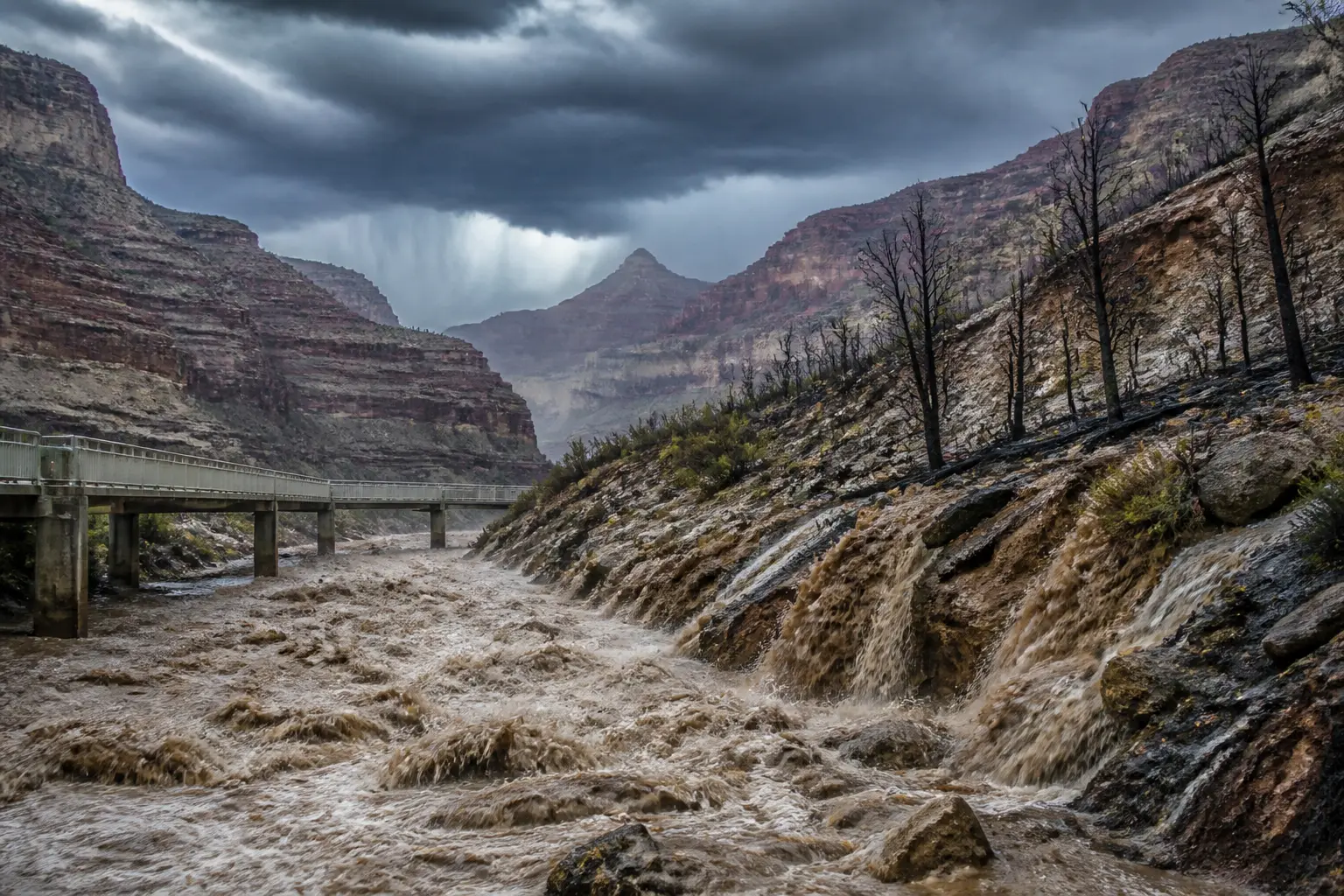
A deadly flash flood in the Grand Canyon killed at least two people and left one missing after heavy rains hit the area, likely exacerbated by drought, wildfire scarring, and warming Pacific Ocean temperatures.
At least two people died and nearly 80 were rescued after a surge of water and debris swept through the Grand Canyon on Saturday, fueled by torrential rains in the Bright Angel Creek area. The flood occurred in a region already affected by the Dragon Bravo wildfire, which burned nearly 150,000 acres and destroyed the historic Grand Canyon Lodge in 2025.
Federal models indicated that runoff risks in the area were two to eight times higher than normal due to the fire. Scientists suggest that the combination of drought, fire damage, and a strong El Niño event contributed to the intensity of the storm. Flash floods are common in the region during the monsoon season, but the confluence of these factors increased the risk of disaster.
Why it matters
The disaster highlights the growing risks posed by climate change and fire damage to vulnerable areas like the Grand Canyon.
This section reflects Dumpling editorial interpretation and is provided for context only.
What to watch
Federal assessments will continue to monitor post-fire runoff risks and their impact on the Grand Canyon’s infrastructure and visitors.
This section reflects Dumpling editorial interpretation and is provided for context only.